19/10/2026 15:35
Missing Cake Enquiries? A TikTok Comment-Filter Workflow for Cambodian Bakeries

A custom-cake video can attract useful questions and unwanted comments in the same afternoon. Someone asks about a birthday design, another person queries delivery, and an unrelated account posts a repetitive promotion. Filtering can make that conversation easier to manage, but an overly broad keyword can also hide the question your shop most needs to answer. For a Cambodian bakery, the practical objective is to keep legitimate enquiries visible and manageable while limiting disruption. This workflow explains how to review filters, recover useful questions and decide whether a promotion problem actually needs better customer service rather than an SMM purchase. The bakery situations below are hypothetical illustrations, not customer results.
1. Diagnose the missing conversation before promoting harder
Start with a specific symptom. Are customers saying their comments disappeared? Is the public conversation quiet while staff receive questions elsewhere? Or are enquiries visible but unanswered? These situations require different responses. Review the affected post, its comment settings and the filtered queue before assuming that the video needs more exposure. An empty-looking conversation alone cannot tell you whether viewers lacked interest.
In a hypothetical Phnom Penh cake shop, an employee adds the word “free” after repeated giveaway spam. Later, someone asks whether a cake can be dairy-free. That shared word creates an obvious risk of catching a legitimate enquiry. The shop should inspect the actual queue rather than assume how every spelling or phrase will behave. Buying additional engagement would not resolve this problem.
2. Set a moderation rule your staff can apply
Write a short internal rule before changing settings: welcome product questions, honest experiences and reasonable criticism; review irrelevant promotions, abuse and exposed personal information. This gives staff a consistent basis for decisions. A comment saying a design is too expensive can remain a legitimate opinion. A message advertising an unrelated money-making scheme serves a different purpose.
Give staff a clear escalation boundary. They can answer confirmed questions about available flavours or collection arrangements, but should refer uncertain ingredient claims and unresolved service complaints to the responsible person. For Cambodian customers, prepare replies in the language they actually use. Do not treat unfamiliar Khmer phrasing, informal transliteration or short English questions as evidence of spam. When meaning is unclear, seek a second reading before deleting.
3. Locate the controls and understand the review queue
TikTok’s official route is Profile, Menu, Settings and privacy, Privacy, then Comments. Under comment filters, its keyword controls let you add terms whose matching comments are hidden pending approval. The same area includes Review filtered comments, where comments can be approved or deleted. TikTok also documents unwanted-comment filtering and Creator Care Mode. Its Filter all comments option requires approval before comments appear and is not available to everyone. See TikTok’s Manage comments source.
For a small bakery, choose settings according to the review time you can provide. A queue that nobody checks can become another unattended inbox. Before changing anything, note the existing settings and appoint a reviewer. Make one deliberate adjustment, then examine what happens during the next staffed period. This is an operational recommendation, not a claim that any setting improves distribution.
4. Build a narrow keyword list from actual problems
Use the unwanted comments you have actually received as the starting point. Record the repeated phrase, why it causes a problem and whether ordinary customers might use it. A distinctive phrase from recurring solicitation deserves consideration before a broad word such as “price,” “delivery,” “cheap” or “free.” Those broad terms belong naturally in shopping conversations.
Keep a separate working list of terms to reconsider. For each proposed filter, imagine a legitimate sentence containing it. Could someone ask about a delivery charge, explain that a cake arrived late, or request a particular ingredient change? If so, the filter may create extra review work. Avoid importing a large generic blocklist without reading it; it may contain everyday words that matter to your products.
Treat language variants as observations rather than guesses. Khmer script, Latin transliteration and English can express similar questions differently. Do not assume a filter understands all those relationships. Review the wording that actually appears and ask a fluent colleague about ambiguous phrases. A short, explainable list is easier to maintain than an expanding collection of uncertain matches.

5. Review filtered comments as customer-service work
Assign review times around the shop’s real operating rhythm: before the counter becomes busy, after publishing a demonstration and before staff finish their shift. These are suggested checkpoints, not a guaranteed response schedule. If you publicly promise a response window, make sure someone can meet it. Name a backup reviewer for days when the owner is decorating or handling collections.
Read the whole comment and its post context. A cake-size question belongs with the design shown in that video, not automatically with the latest product. When a useful comment is appropriate to make public, approve it and answer the question. Approval and response are separate tasks; rescuing an enquiry from the queue does little if it then remains unanswered.
Keep a compact internal note when a filter catches something useful: post reference, general question category, suspected matching term and action taken. Avoid copying unnecessary customer details. If the same term repeatedly catches ordinary enquiries, revise the list. The purpose of the note is to improve decisions, not create a permanent archive of every person who comments.
6. Separate product questions, complaints and unwanted content
Use three practical routes. Answer product questions with confirmed information. Send service complaints to someone who can investigate and respond. Remove clear spam or abuse according to your moderation rule. A negative tone alone should not move a comment into the spam category. Customers may sound frustrated because their celebration depended on a collection time or design detail.
In a hypothetical example, “The colour was different from what we agreed” needs a service response. A suitable public reply acknowledges the concern and directs the customer to the shop’s established private contact route for order details. Do not ask them to post a receipt, telephone number or delivery address publicly. Equally, do not promise a refund or replacement before the responsible staff member has reviewed the case.
If a comment already exposes private information, avoid repeating it in your reply or internal screenshots. Handle the underlying concern through the established contact route while addressing the public exposure. Staff should be able to explain a moderation decision by reference to content and privacy, rather than whether the comment made the business look good.
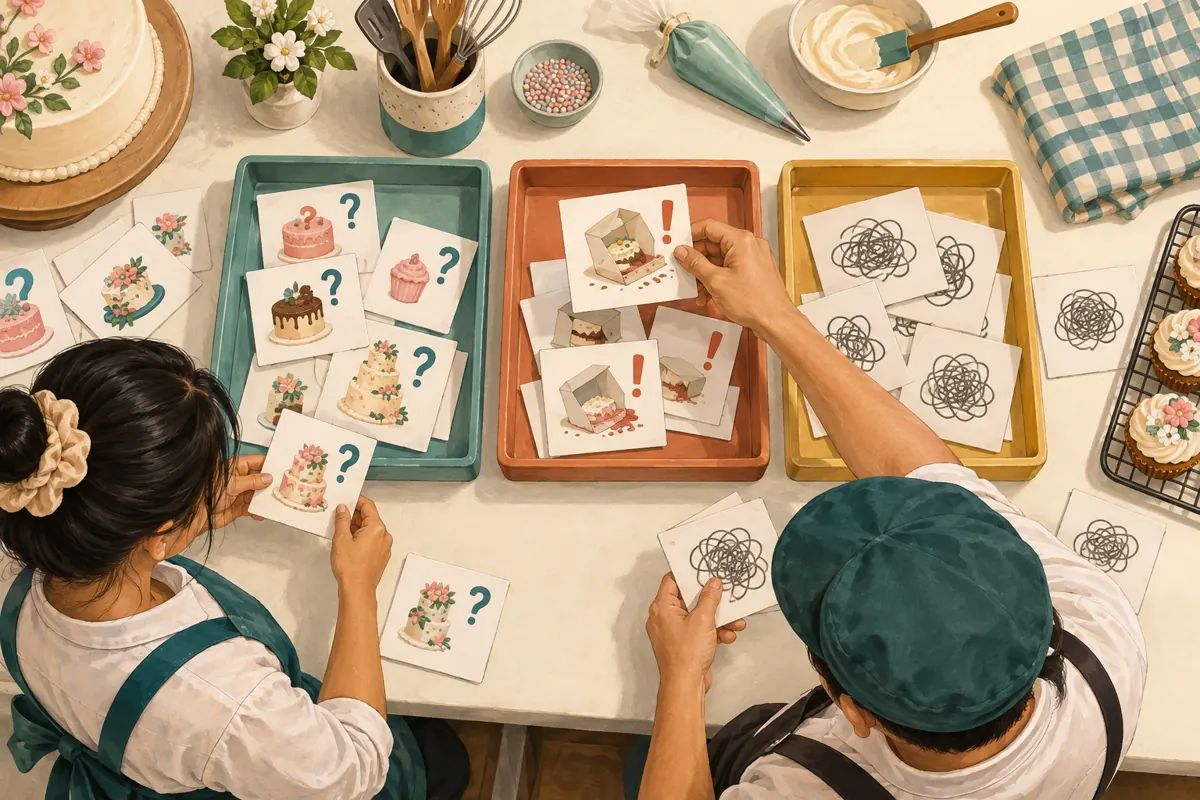
7. Make recovered enquiries easier to answer
Prepare short response outlines for recurring cake questions, leaving space for the actual answer. A design enquiry may need the event date, approximate size and collection or delivery preference. Ask only for what is needed at that stage. A customer should not have to submit a complete personal profile merely to learn whether the shop can discuss a design.
For a hypothetical Siem Reap bakery, an employee could reply: “We can discuss a smaller version of this design. Please use our listed contact method with your preferred date and size so we can check availability.” This avoids turning a public comment into an unverified booking. Do not confirm production capacity until the person responsible for the schedule has checked it.
Use repeated questions to improve the next video. If viewers keep asking whether a decoration is included, show the included elements clearly. If collection timing remains confusing, explain the process in the content itself. Better information reduces avoidable exchanges and gives future viewers something useful even when staff are away from the phone.
8. Decide what an SMM service cannot solve
The supplied public catalogue includes “TikTok Live Stream Views [ 30 Minutes ]”. That exact title identifies a LIVE-view listing with a stated time label; its description is empty. It provides no supporting explanation of delivery method, audience location, viewer interest or customer suitability. It is also a different target from the comment queue beneath an ordinary cake video.
Do not infer that a service can moderate comments, restore a hidden question or bring Cambodian cake buyers simply because it appears in an SMM panel. Purchased engagement is not evidence of genuine interest, sales, official ad delivery or Cambodian users. A successful delivery record, if one exists, answers a service-order question; it does not establish that anyone wants a cake.
TikTok’s Integrity and Authenticity guidelines prohibit trading services that artificially increase engagement and describe removing inauthentic signals. That makes the method behind an offer material to the decision. Do not use artificial activity to make the shop appear more trusted or popular. For the problem covered here, spend effort first on review coverage, useful demonstrations and clear customer replies; none requires purchasing engagement.
9. Review the workflow without inventing success
After a working cycle, ask what the review changed. Were genuine questions recovered? Which terms created unnecessary work? Did staff resolve uncertainties about designs or collection? These observations can justify a narrower filter or a clearer video. They do not prove additional revenue. A question, a quote request and a confirmed cake order remain different stages.
Maintain separate records for moderation decisions, customer enquiries and any existing panel activity. If a customer confirms an order, use the shop’s normal order record rather than a comment count as evidence. When reporting to the owner, say what is known: a question was approved and answered, a filter was revised, or an enquiry remained unresolved. Avoid attributing a booking to a particular promotion unless the available evidence supports that connection.

Frequently asked questions
Should a bakery filter every comment before it becomes public?
Only consider that approach if the option is available and your team can sustain the review work. It can delay harmless questions as well as unwanted content. Decide whether the problem justifies that burden, establish review coverage and reassess the queue regularly. Do not choose the strongest setting simply because it sounds more protective.
Should we delete comments that call our cakes expensive?
A price objection is not automatically spam. If appropriate, explain the relevant size, decoration or work included without arguing with the customer. They may still decide the product is unsuitable. Apply the same moderation rule to positive and negative comments; reserve removal for a clear reason such as abuse, irrelevant solicitation or exposed private information.
Can one keyword list work equally well for Khmer and English comments?
Do not assume that it can. Customers may switch languages, use informal spellings or transliterate Khmer. Build your decisions around observed comments and fluent human review. If staff cannot confidently understand a phrase, ask for help before deleting it. Revisit terms that catch ordinary enquiries instead of adding more variants automatically.
What should we do when someone says their question was ignored?
Acknowledge the delay and check both the visible conversation and the filtered queue. If you find the question, answer it using current information and review why it was missed. Do not publicly blame the customer or confidently blame a filter without evidence. Offer the shop’s established contact route if their request needs private details.
Would buying views make the moderation problem less important?
No. Additional activity cannot substitute for reading a hidden question or handling a complaint. It may also make business reporting harder if staff confuse engagement delivery with customer demand. Resolve the service bottleneck first. Any assessment of an SMM offer must consider its documented method and platform rules, not just its name or displayed activity.
Explore the current service catalogue, create an account, or ask a specific question through support tickets.
Prepared with AI assistance. Illustrations explain the workflow and do not represent customer results.