22/10/2026 07:33
Open Rack or Folded Frame? YouTube Thumbnail Tests for Cambodian Housewares Shops

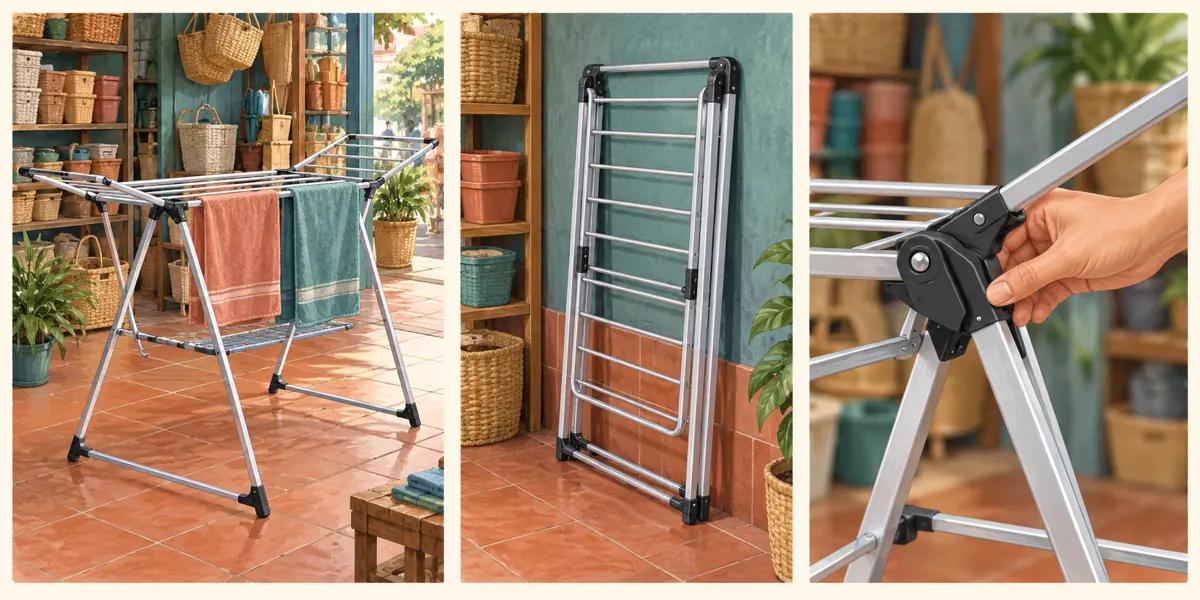
A drying rack looks very different when it is holding laundry and when it is folded beside a wall. Both images can represent the same product honestly, yet they answer different questions. One explains everyday use; the other suggests what happens when the washing is finished. For a Cambodian housewares shop promoting a YouTube demonstration, choosing between them is a useful, specific testing problem. This guide explains how to prepare that comparison, interpret its outcome and decide what to do next. It also explains why an SMM panel engagement order cannot establish which image helps prospective buyers understand the product.
1. Start with the uncertainty a buyer needs resolved
In a hypothetical Phnom Penh shop, staff hear two recurring questions about a folding drying rack: how much floor space it occupies when open, and where it can be stored afterward. The shop has a demonstration showing both states. Its thumbnail currently shows a distant rack surrounded by unrelated household goods. Before commissioning another promotional graphic, the owner writes a focused question: does an open-rack image or a folded-rack image introduce this demonstration more clearly?
That question gives the work a boundary. The team is choosing how to present one existing video, rather than trying to determine every customer's preferred product. Review actual enquiries for wording, but remove names, telephone numbers and private photographs from the planning document. If staff cannot identify a real uncertainty, first watch the demonstration and list what it genuinely explains. A thumbnail experiment needs a useful promise that the footage can fulfil.
2. Check whether the footage earns each thumbnail
Watch the complete demonstration before selecting photographs. An open-rack candidate should lead to footage that shows the frame opened properly, with its footprint visible. A folded candidate should lead to a clear folding sequence and a view of the finished shape. If the video skips storage entirely, a photograph of the rack tucked neatly behind furniture creates an expectation the demonstration does not satisfy.
Make a simple evidence note for each candidate: the subject shown, the question it suggests and the moment in the video that answers it. Reject candidates without a matching explanation. Also check model consistency. Similar racks may have different hinges, feet or support bars, so a convenient supplier photograph is unsuitable unless it accurately represents the demonstrated item and the shop has permission to use it. Use actual product photography for the published thumbnail; editorial illustrations accompanying this guide are conceptual teaching assets.
3. Build alternatives with meaningfully different subjects
Prepare an open view and a folded view using the same rack, similar lighting and an uncluttered background. Keep the whole relevant shape visible. In the open version, a small amount of laundry can explain use, but covering every rail hides the structure. In the folded version, include enough surrounding space to make its orientation understandable without implying an unmeasured storage clearance.
A third option is worthwhile only if it introduces another genuine question, such as how the hinge operates. Do not add it merely to fill an available slot. Changing a border from orange to green while leaving everything else identical offers little practical learning about the buyer's needs. Write a short internal label for each file, such as open, folded or hinge. Those labels help staff discuss the options without inventing names such as premium version or best seller, which could imply unsupported product differences.
4. Review the images at a customer's viewing size
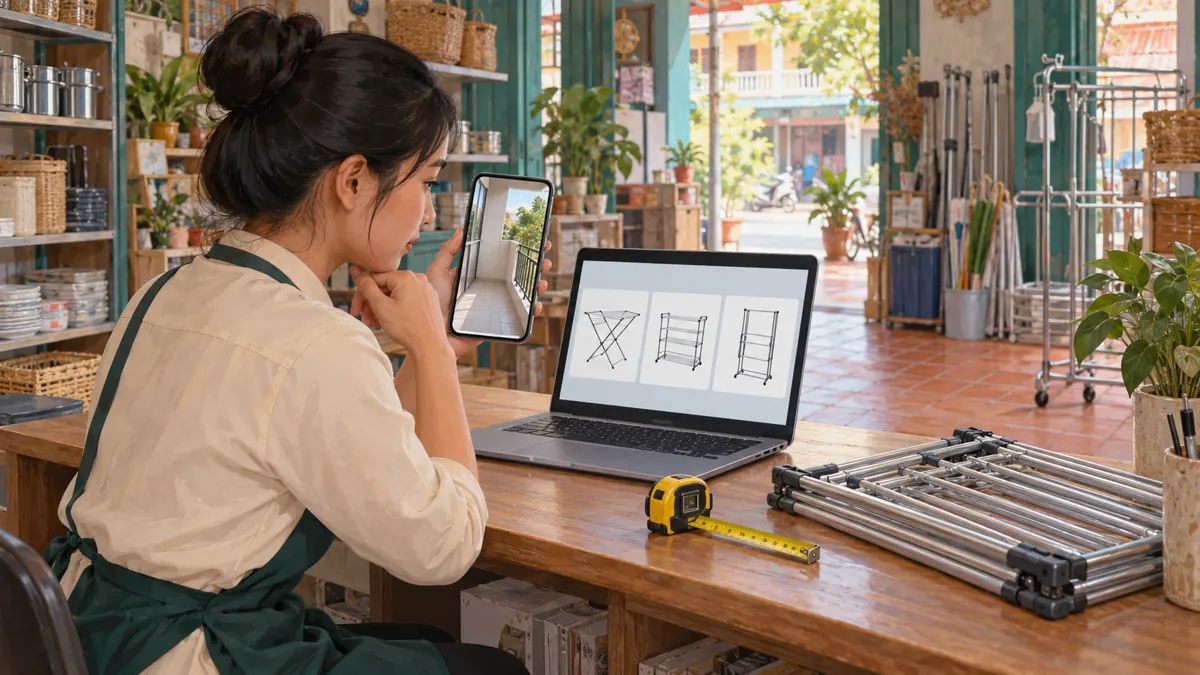
Reduce each candidate on a phone screen before judging its appearance. Thin metal rails can disappear against shelves, window grilles or patterned tiles. A folded rack can resemble a ladder when the crop removes its feet and hinge. Ask a colleague who did not design the image to describe what it shows and what they expect the video to explain. Record confusion before giving them the intended answer.
For a shop addressing Khmer-speaking customers, any added Khmer wording should be brief and checked by a fluent reader. Keep a genuine model name unchanged where necessary, but avoid mixing several languages simply to occupy empty space. Do not put an entire size chart, delivery policy and price offer into the thumbnail. Those details belong in places where people can read them properly. The visual should make one useful distinction, while the title supplies context.
5. Set up a thumbnail-only comparison
YouTube's official A/B testing guidance permits up to three alternatives through desktop Studio and requires advanced-feature access. Shorts and private videos are ineligible. For an eligible video, open its details, choose A/B Testing under Thumbnail, select Thumbnail only, upload the candidates and click Done. Keep the title unchanged for this comparison.
Before starting, save a short test brief containing the video link, approved files, question, responsible staff member and start date. Select a demonstration whose product information remains useful throughout the review period. A video advertising stock that is already unavailable is a poor candidate, however attractive its images are. In the hypothetical shop, the owner chooses an existing demonstration of a currently stocked rack and checks that staff can answer enquiries about it. This preparation makes the result actionable: the team will have a relevant video to retain, explain and share afterward.
6. Protect the comparison from avoidable interruptions
YouTube says tests can take a few days to two weeks. Changing the title or thumbnail during the test stops it and requires a restart. Review progress through the video's Analytics, Reach tab and Manage test control. Assign one person to handle changes so that a well-meaning colleague does not replace a candidate halfway through.
Keep a brief activity diary alongside the test. Note ordinary promotional actions, such as sharing the demonstration in response to an enquiry or including it in a shop update. These notes provide context; they do not reveal which thumbnail a particular person saw. Avoid simultaneously launching several unrelated creative changes if the team wants a manageable review. If the video contains an incorrect measurement, however, accuracy takes priority over preserving the experiment. Correct the customer-facing problem, document the interruption and decide whether a fresh test is still useful.
7. Keep SMM catalogue claims outside the experiment
The supplied catalogue includes “YouTube Like ~ Max 50k ~ 50k/days ~ Instant ~ 𝗥𝗘𝗙𝗜𝗟𝗟 30D”. Its name presents it as a likes service, but the brief provides no supporting description. The quantity, speed and refill wording are catalogue claims, not verified performance or a promise this article can endorse. Nothing in that listing establishes Cambodian audience origin, genuine viewing intent or product interest.
A likes order cannot answer whether the open or folded image communicates better. Purchased engagement is not evidence of sales, advertising delivery or Cambodian viewers. YouTube's fake engagement policy prohibits artificial increases to engagement metrics and warns that a hired promoter's actions can affect the channel. Do not purchase artificial engagement to support this experiment. When reviewing an SMM panel proposal, ask what the activity actually involves and reject methods that conflict with platform rules. Allocate the practical work here to accurate photography, editing and genuine customer assistance.
8. Read the result without turning it into a sales claim
YouTube evaluates its test using watch time, with results including Winner, Performed Same and Inconclusive. When there is no clear winner, the first option becomes the default; creators can choose another manually. Save the actual result wording rather than rewriting an uncertain outcome as a victory.
Suppose, hypothetically, that the folded image wins. A reasonable note says the platform selected that image for this video during this test. It does not say Cambodian households prefer compact racks, that the rack will fit every balcony or that the thumbnail increased purchases. If the options perform similarly, choose the clearest accurate image and move on. If the result is inconclusive, retain the uncertainty. Repeating the test immediately with almost identical files can consume staff time without resolving the underlying question. Consider whether a more distinct, truthful view would provide a better next comparison.
9. Review enquiries as a separate business task
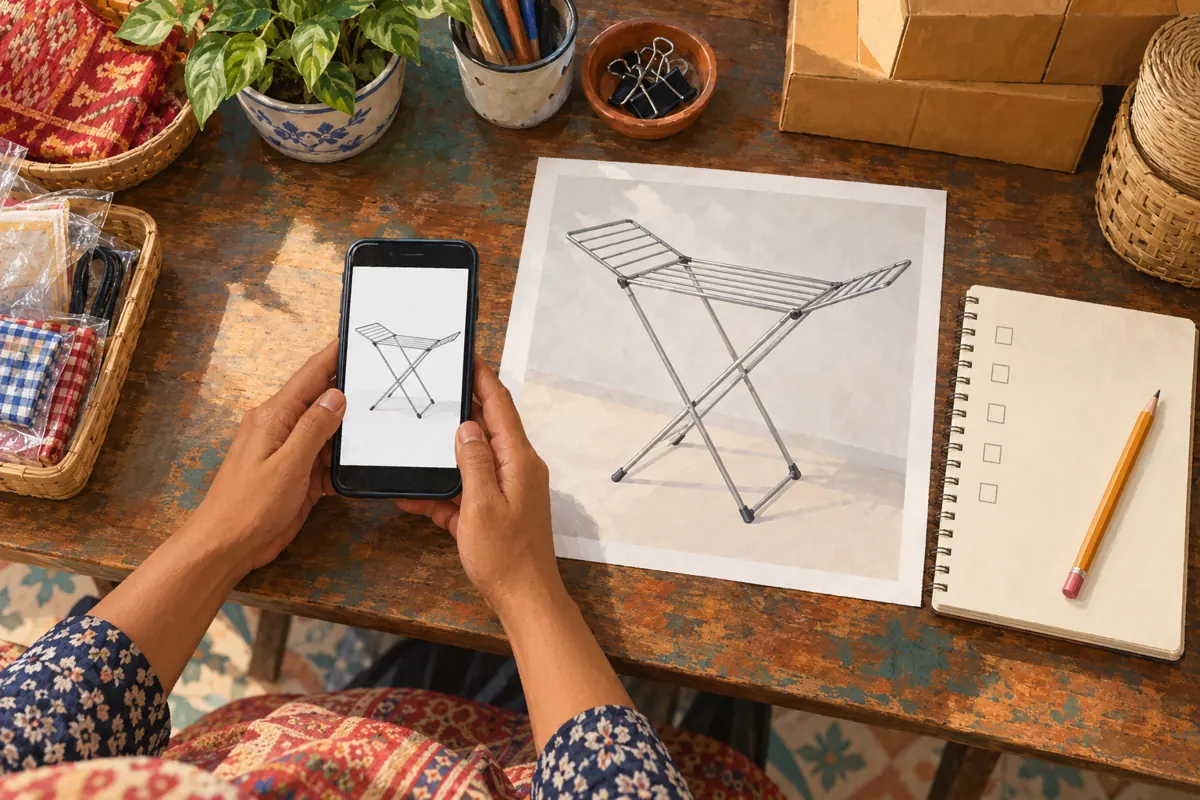
Maintain a small enquiry log for the demonstration: what the person asked, which rack model they meant, what information was missing and whether staff resolved the question. A practical entry might say that someone needed the open footprint before measuring a balcony. Avoid collecting unnecessary personal information. Keep confirmed orders in the shop's normal sales records rather than inferring them from comments or likes.
In another hypothetical outcome, the folded thumbnail is selected, but enquiries still repeatedly ask whether the rack stands securely when open. That suggests a useful content task: improve the stability explanation with an accurate demonstration appropriate to the product. It does not invalidate the thumbnail result or prove that the image caused those questions. Ask customers how they found the shop when appropriate, and accept that some will not remember. A customer enquiry may identify a knowledge gap even when attribution remains uncertain.
10. Avoid shortcuts that distort the product promise
Do not use perspective tricks to make a rack appear narrower, remove a support bar to simplify the picture or surround it with more laundry than the demonstration supports. Avoid unverified load claims and phrases implying it fits any room. A photograph beside a wall illustrates storage; it does not establish clearance for a customer's home. Where dimensions matter, provide measured information separately and identify the model.
Another common mistake is manually swapping thumbnails on different days and declaring the busier day the winner. Different circumstances make that comparison difficult to interpret. Likewise, a staff vote can reveal which image colleagues prefer, but it is not a platform experiment or customer study. Use these informal reviews for spotting ambiguity and errors. Keep their conclusions modest, and never present a staged reaction, fabricated testimonial or purchased engagement count as evidence that buyers approve of the rack.
11. Turn the result into one maintainable decision
Close the task with a short record: which image remains in use, the test's wording, why the selected image is accurate and what question still needs better content. Save the approved thumbnail beside its source photograph and video reference. This helps a replacement staff member understand the choice without reopening the entire design discussion.
Choose the next action according to the remaining problem. If viewers cannot identify the rack, improve the crop. If they understand the product but need storage measurements, prepare that explanation. If enquiries receive slow or incomplete replies, fix the response workflow before commissioning more promotional assets. Revisit the thumbnail when the demonstrated model or the video's promise changes, rather than because the shop has a quiet afternoon. A useful promotion workflow ends with a clearer customer experience and an honest account of what the evidence can support.
Frequently asked questions
Should the shop test thumbnails if very few people watch its videos?
Only if the work is proportionate. Start with a clear photograph and an accurate demonstration. A small shop can still learn from recurring customer questions and readability checks. Treat an uncertain test outcome as uncertainty, and avoid spending repeatedly on minor design variations when the video itself needs improvement.
Can the open and folded thumbnails use different Khmer phrases?
They can, but then both the photograph and wording change. You will be evaluating the combined presentation rather than isolating the visual subject. For a first comparison, keep any wording consistent where it remains accurate, or omit it and let the unchanged title explain the demonstration.
What if the preferred thumbnail depicts a product that has sold out?
Review whether the video still serves a useful instructional purpose. Make current availability clear wherever customers enquire, and do not imply an alternative rack is identical. If the demonstration no longer represents the offer, address that mismatch before using its thumbnail result to guide further promotion.
Does a winning thumbnail justify a larger SMM budget?
It does not establish that an engagement service is suitable, compliant or commercially effective. Review the proposed activity on its own merits. A thumbnail result concerns the presentation of that video; spending decisions also require reliable product information, service capacity and separate evidence about genuine enquiries and confirmed transactions.
Explore the current service catalogue, create an account, or ask a specific question through support tickets.
Prepared with AI assistance. Illustrations explain the workflow and do not represent customer results.