20/10/2026 04:15
Open for Pickup or Repair? Telegram Business Hours for Cambodian Watch Shops

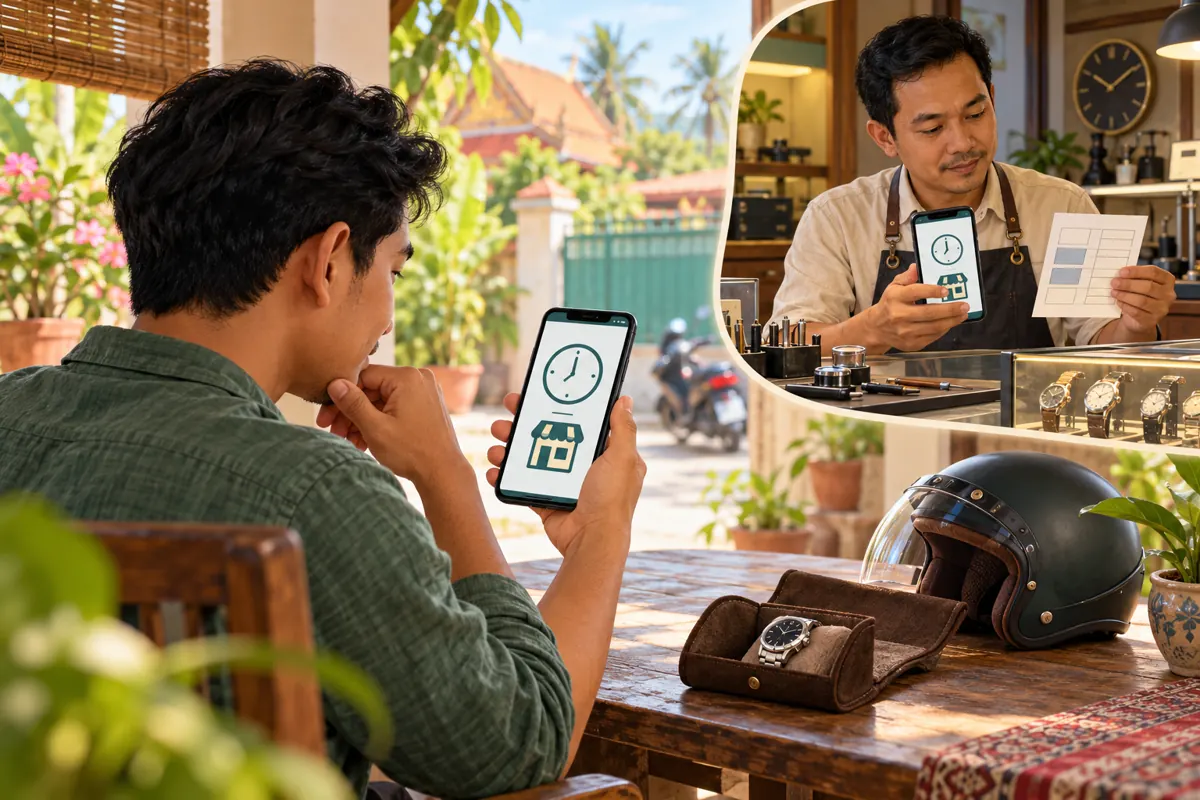
A customer sees a watch-strap promotion, checks the shop’s Telegram profile and decides to travel across town. The counter is open, but the technician has left, and the repaired watch is not ready for collection. The opening time was accurate; the expectation was not. For Cambodian watch-repair businesses, useful social media promotion connects an attractive offer with a visit the shop can actually support. This workflow explains how to prepare Telegram business hours, distinguish different kinds of availability and handle exceptions before considering an SMM panel service. The shop and schedules used below are hypothetical examples, not customer results.
1. Decide what your opening hours promise
Start with a practical question: what can a visitor reliably do during the hours you publish? A watch business might sell straps, accept repairs, arrange inspections and return completed work. Those activities can follow different schedules. If one person handles the counter while another performs repairs, an open entrance does not mean every service is available. Agree on the meaning of the published hours before entering them into an app.
Use counter access as the main schedule when that is the dependable service customers can expect. Describe technician attendance and collection requirements separately. If visits require appointments, state that condition prominently in your customer-facing information. Avoid turning occasional flexibility into a standing promise: accepting one late collection does not justify advertising a later closing time. Ask the person who actually opens and closes the shop to approve the schedule.
2. Check the Telegram feature before planning around it
Telegram’s official Business introduction says businesses can display operating hours and a map location on their profiles, helping visitors see whether they are open. It directs users to Settings > Telegram Business. The announcement describes Business features as included with Premium at the time of publication; check the current options and subscription terms in your own app before relying on access. The exact official source is listed below.
Open the relevant settings on the account customers actually contact. Read the available controls and prepare the schedule before saving anything. Do not assume a channel’s public identity and a business account’s profile are the same destination. Follow the contact route in your promotional post to establish which profile a customer reaches. If the hours feature is unavailable, provide a clear written schedule in your customer-facing information and verify that visitors can find it.
3. Build three separate availability statements
In a hypothetical Phnom Penh shop, the counter operates Monday through Saturday, 9:00 a.m. to 6:00 p.m. The technician accepts inspection appointments from 10:00 a.m. to 4:00 p.m. Staff answer messages between counter tasks. These are three different statements: visiting hours, specialist availability and reply expectations. Write them separately in an internal reference note so staff do not compress them into a misleading phrase such as “available all day.”
A suitable hypothetical customer message would be: “Our counter is open Monday–Saturday, 9:00 a.m.–6:00 p.m., Cambodia time. Please confirm an appointment for a technician inspection. For collection, wait until we confirm your watch is ready.” Add a realistic reply expectation only if staff can maintain it. Receiving a message after closing should not silently become a promise of immediate assistance. Explain the specific action the customer should take next.
4. Enter a schedule that matches the staffed counter
Review each day individually rather than copying the longest working day across the week. Check whether anyone remains at the counter during lunch, whether a weekly closure is consistent and whether the final collection time differs from closing time. Where the available controls accommodate your actual pattern, enter it accurately. Where they do not, make the limitation clear in the accompanying information instead of displaying a continuous interval that suggests uninterrupted service.
Read every saved time aloud with its day. This catches errors such as confusing morning and evening or leaving an unintended day open. If the settings offer a time-zone choice, verify it against the shop’s Cambodia schedule. In written notices, use an unambiguous format and identify Cambodia time when visitors may be abroad. Keep a dated internal copy of the approved schedule, including the staff member responsible for reviewing it when working arrangements change.

5. Test the information as a visitor
Ask a colleague to open the public contact destination using their own account, without borrowing the shop’s login. Have them describe what they understand: when they can arrive, whether an inspection needs confirmation and whether they can collect an unfinished repair. A useful test asks for an interpretation, not simply whether the page looks correct. If the colleague assumes every service is available throughout the published hours, the supporting explanation needs work.
Check the route from a real promotional draft as well. A strap demonstration might lead to a channel, which then points to the shop’s contact account. Verify that the visitor can reach the intended information without guessing between similar names. Review the display during an ordinary open period and again after closing when practical. Record discrepancies as concrete problems, such as “inspection condition missing from contact message,” and assign someone to correct them.
6. Match each promotion to a visit the shop can support
A strap-fitting demonstration should tell viewers whether they can walk in or need to confirm compatibility first. A repair explanation should invite an assessment without implying an immediate diagnosis. A collection reminder should go to the relevant customer only after staff verify readiness. Choose the next action from the actual service being offered. A broad instruction to “visit today” can create unnecessary travel when a short conversation would establish whether the visit is useful.
For a hypothetical strap promotion, ask customers to send a clear photograph and their preferred visiting day before travelling for an unusual fitting. Explain that staff will confirm whether an inspection is needed. Do not promise stock or compatibility from the photograph alone. Prepare the post in the language its intended readers understand, and have a fluent reviewer check any Khmer version. Keep the same schedule meaning across languages even when the wording differs.
7. Handle temporary closures with a return plan
A family commitment, stock trip or holiday closure needs more than an informal remark in a conversation. Write an exception notice with the exact affected date, the unavailable service and the next confirmed opportunity to visit. Avoid “tomorrow” in a notice that may be read later. If the reopening time is uncertain, say that customers should request confirmation before travelling; do not fill the gap with a convenient estimate.
Check both the displayed hours and any active promotion that invites an immediate visit. If you temporarily adjust a recurring schedule, create a reminder to restore it once normal operations resume. Assign that reminder to a named staff member and retain the usual schedule in the internal note. Contact customers with existing appointments individually where necessary. A public notice should support that communication, not replace a direct update to someone whose visit has already been arranged.
8. Keep SMM panel delivery separate from shop availability
The supplied khmer-social.com catalogue includes the exact public service name “Reactions + view posts | ☃️” in a Telegram reactions-and-views category. This identifies the listed service type, but its supplied description is empty. There is no description evidence here for audience location, delivery quality, timing or business outcomes. A catalogue entry also does not establish official Telegram affiliation or confirm that a proposed use complies with applicable platform rules.
That service cannot establish whether a technician is present or a customer’s watch is ready. Purchased engagement is not evidence of genuine interest, sales, advertising delivery or Cambodian users. If you evaluate an SMM request, first confirm the current service requirements and whether the use is permitted. Keep any order record separate from appointment and collection records. Where the immediate problem is unclear hours, correcting the information is the useful action; buying engagement does not resolve it.
9. Avoid shortcuts that create false expectations
One common mistake is using message access as a reason to advertise around-the-clock opening. Another is publishing the technician’s working hours as though the whole counter closes when that person leaves. Both obscure what customers can actually do. Choose language that names the available activity. “Counter open; inspections by confirmation” gives staff a clearer promise to fulfil than a vague claim that the business is always available.
Other mistakes include leaving a temporary closure in place after reopening, assuming a ready-for-collection message was sent because a repair is complete, and judging a promotion by reaction totals alone. Build a small review habit around those failure points. At opening, confirm staffing and exceptions. Before inviting collection, check the individual repair record. Before repeating a promotion, ask whether its instructions produced understandable enquiries. These checks address different decisions and should not be collapsed into one popularity measure.
10. Review customer confusion and improve the next post
Keep a brief, private issue log when customers misunderstand the schedule. Record the question, where they found the information and what clarification helped. Useful categories include technician availability, lunch closure, appointment confirmation and collection readiness. Avoid copying unnecessary personal details into the log. Review patterns after a normal working cycle, especially after introducing new hours or promoting a service that requires specialist attention.
In a hypothetical review, staff might find repeated questions about whether an open counter means same-day repair. The response is to clarify assessment and completion arrangements in the next demonstration and contact message. It is not evidence that the shop needs more views. Track genuine enquiries and confirmed visits through ordinary business records, while acknowledging that you may not know which post prompted each visit. The purpose of the review is a clearer customer decision and a promise the team can keep.

Frequently asked questions
Should we list the counter hours or the technician’s hours?
Use the hours that best describe the dependable access you offer, usually the staffed counter for a walk-in shop. Explain technician availability separately and require confirmation where appropriate. If the entire business operates by appointment, make that condition explicit rather than presenting a broad interval as unrestricted walk-in access.
Can an open status tell a customer their watch is ready?
No. Opening information describes general availability, while readiness belongs to an individual repair. Check the repair record and send a clear collection confirmation. Include any necessary collection conditions privately. Customers should not have to infer readiness from a profile, a promotional post or the fact that somebody answered their message.
What if the shop cannot maintain a predictable weekly schedule?
Avoid publishing hours that staff routinely cannot honour. Explain the need to confirm visits and provide the next reliable availability when asked. Maintain a dated notice for known exceptions. If you later establish stable staffed hours, update the public information and test it again before promoting walk-in visits.
Should a holiday notice replace the normal schedule?
Make the temporary exception clear wherever customers decide whether to travel. Depending on the controls available, that may involve adjusting displayed hours and adding a dated explanation. Preserve the normal schedule internally and set a restoration reminder. Existing appointments still need direct attention rather than an assumption that everyone saw the notice.
Would more Telegram reactions show that our opening-hours message worked?
Reactions alone cannot establish that readers understood the schedule or planned a suitable visit. Purchased reactions are particularly unsuitable as evidence of genuine customer intent. Look at the questions people actually ask and the misunderstandings staff encounter. Use those observations to improve the wording without claiming that every change caused a business result.
Explore the current service catalogue, create an account, or ask a specific question through support tickets.
Prepared with AI assistance. Illustrations explain the workflow and do not represent customer results.