19/10/2026 05:32
From Telegram Channel Post to Furniture Quote: A Practical Workflow for Cambodian Shops
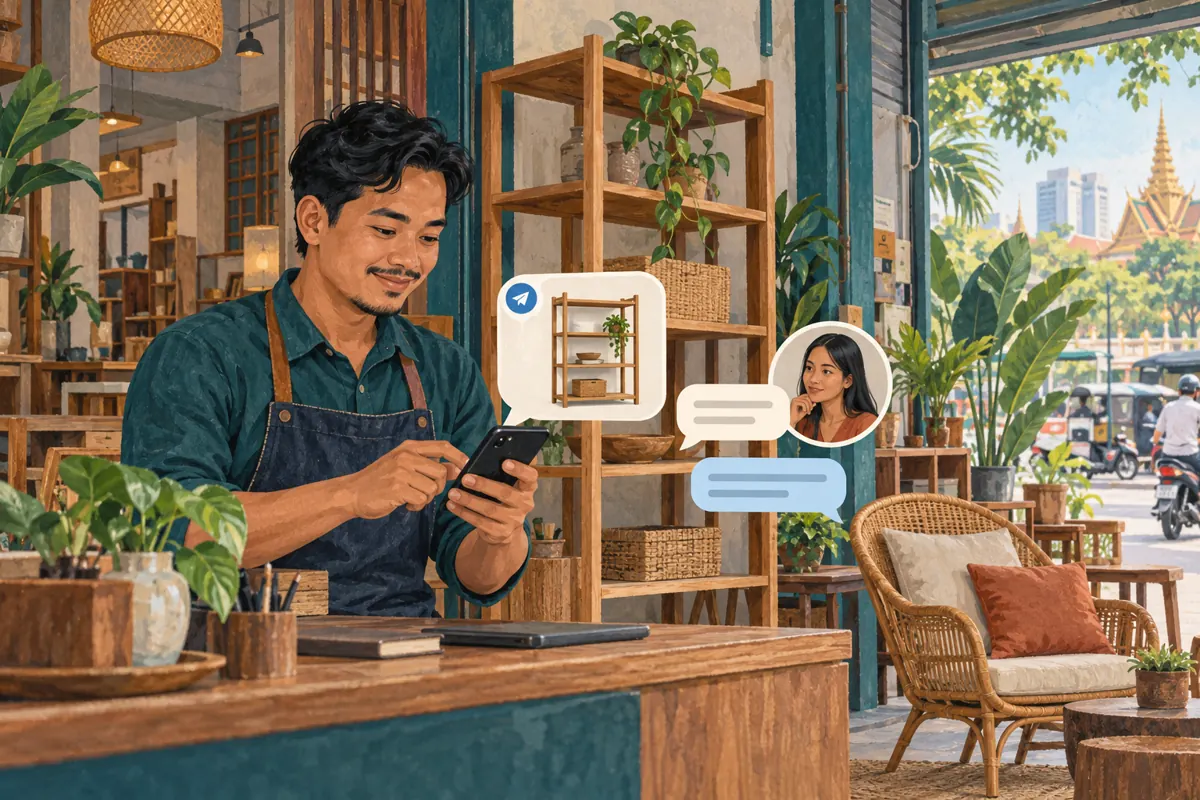
A furniture photograph can attract attention while leaving the buying decision unresolved. Will the shelf fit the available space? Is the pictured finish available? Can the shop deliver upstairs? For a Cambodian furniture business promoting products through a Telegram channel, these questions need a clear route from the public post to a conversation with someone who can check the answers. This guide explains how to build that route using channel direct messages, gather only the details needed for a quotation, and distinguish a customer inquiry from social promotion activity. The running example is a hypothetical Phnom Penh furniture shop selling wooden shelving units; it illustrates a workflow, not a customer success story or promised result.
1. Decide what the conversation needs to resolve
Start with a specific customer task: obtaining a quote for a particular shelf, finish and delivery arrangement. A vague invitation to contact the shop pushes all the work onto the shopper. A better invitation explains what to send and what the shop will check. For this hypothetical shop, the initial request is the product reference, preferred finish, quantity and delivery district.
Define the stopping point as well. Receiving a message does not reserve stock, confirm a delivery slot or create an accepted order. The conversation first establishes whether the shop can meet the request. Only then should staff prepare a quotation and explain the separate confirmation process. This boundary helps prevent an enthusiastic reply such as “Yes, available” from being interpreted as a promise covering transport, assembly and timing.
2. Enable the channel’s inquiry route and test it
Telegram’s official feature announcement explains that channel owners can enable direct messages through Channel Settings > Direct Messages. Readers use the message bubble at the bottom of the channel to contact it. These conversations appear separately from the owner’s personal chats, and Telegram also supports an optional charge for each message. The official instructions are at https://telegram.org/blog/direct-to-channel-trim-voice-and-more.
For ordinary furniture quotations, consider leaving inquiries free so customers can ask a practical question without a payment step. Confirm the actual setting before advertising the route. Ask a colleague using a normal customer account to locate the message control, send a sample inquiry and check the reply. Interface wording may vary, so test the experience your customers encounter. Assign someone to check incoming inquiries during stated shop hours; enabling a feature alone does not create a staffed service.
3. Give each promoted product a usable reference
A private conversation becomes difficult when the opening message says only “How much?” and the channel contains several similar shelves. Give each product a short reference that staff also use internally. In this hypothetical example, the pictured shelf is S-04. Include its measured dimensions, material description, available finish choices and whether the photograph shows the exact item or a sample.
Finish the post with a specific next step: “For a quotation, message this channel with S-04, your preferred finish, quantity and delivery district. We will check stock and transport before confirming.” This is illustrative English wording; a shop serving Khmer-speaking customers should prepare a natural Khmer version. Include any confirmed base price and its currency where appropriate, while stating which costs remain dependent on the request. Do not hide basic product information merely to generate more messages.
4. Collect details in two short rounds
The first reply should establish the item and broad delivery needs. Avoid presenting a long questionnaire before answering the customer’s immediate question. A hypothetical response might read: “Thank you for asking about S-04. Which finish and quantity would you like, and which district would delivery be to? I will check availability before preparing the quotation.” If the customer already supplied an answer, acknowledge it instead of asking again.
The second round covers details that materially affect feasibility or cost: floor level, stairs or lift access, doorway clearance, assembly needs and the requested date. Ask for an exact address only when necessary for a delivery assessment or confirmed arrangement. Explain why a detail matters. “Could you measure the narrowest doorway?” is more useful when followed by “We need to check whether the assembled shelf can pass through it.”
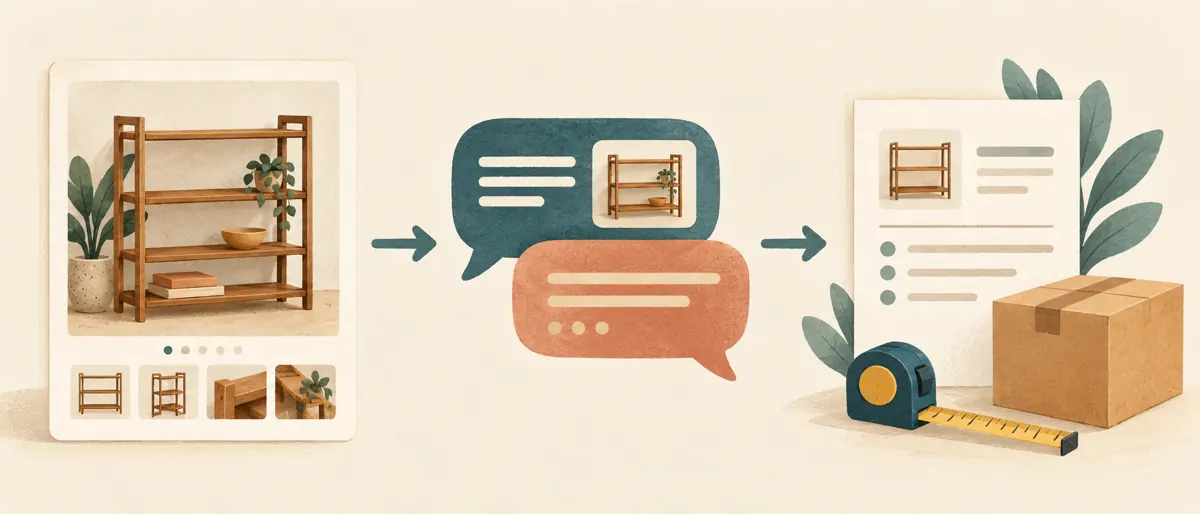
5. Turn room and access questions into checkable facts
Furniture inquiries often contain uncertain descriptions: “small room,” “normal stairs” or “near the market.” Replace these with the particular measurement or location detail the shop needs. State the unit when requesting dimensions, and distinguish product width, depth and height. If a customer sends a voice message, summarize the important details in writing and ask them to confirm the summary before it affects the quotation.
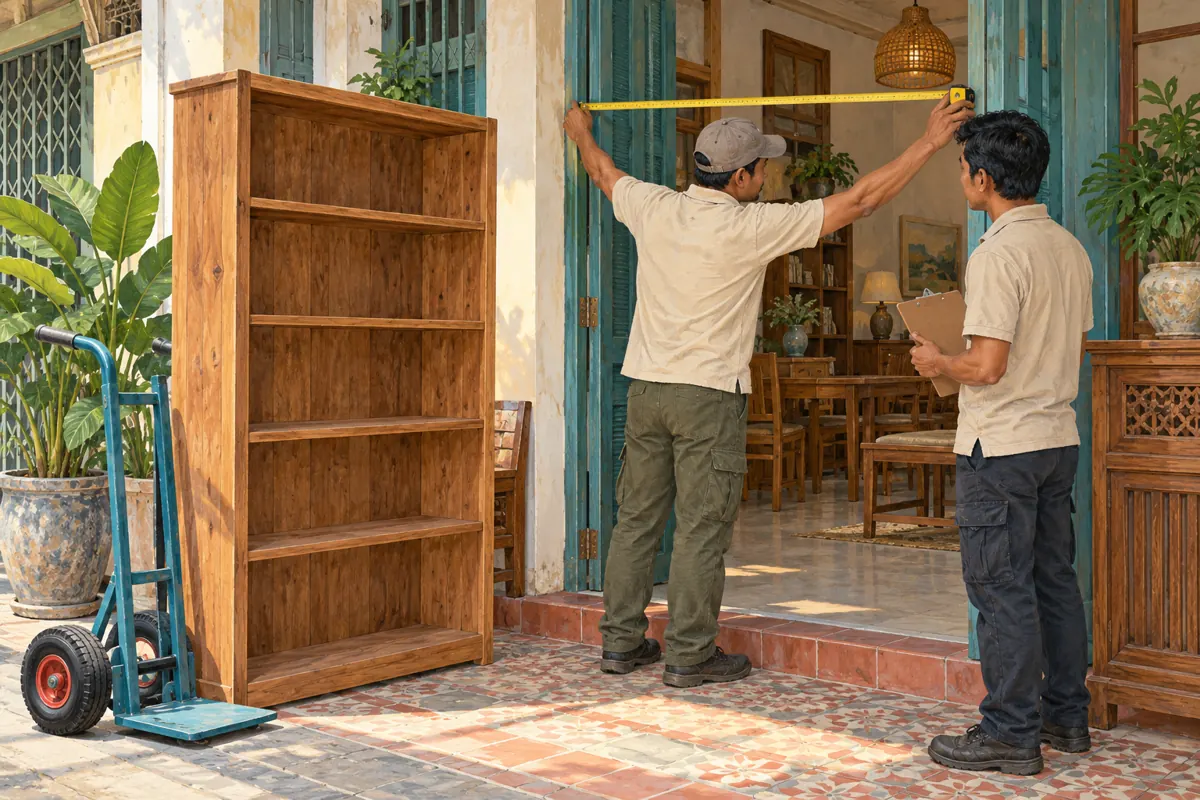
A doorway photograph can help explain an obstruction, but it does not establish accurate clearance by itself. Ask for measurements rather than estimating from the image. Invite customers to exclude faces, household documents and unrelated belongings from any photo. For a hypothetical delivery to an upstairs room, staff might need to check a stair turn as well as the entrance. If access remains uncertain, explain the unresolved condition instead of promising that the delivery team will manage somehow.
6. Make the quotation understandable without the whole chat
Prepare a compact written quotation that names the product reference, finish, quantity and relevant dimensions. Separate the furniture price from delivery, assembly or other applicable charges. State the currency for every amount, especially if the shop discusses both riel and US dollars. Include the proposed delivery arrangement, quotation validity and any condition that must be resolved before acceptance. Use the shop’s actual terms rather than copying assumptions from another seller.
Keep estimates visibly provisional. For example, a hypothetical reply could say: “The item is available in the requested finish. The delivery charge is pending an access check, so this is not yet a final total.” Once checked, send a complete revised quotation instead of scattering corrections across multiple replies. Ask the customer to confirm the named product and arrangement explicitly; a reaction to a photo is too ambiguous to serve as acceptance.
7. Choose promotion according to the missing step
Before considering an SMM panel service, identify the actual obstacle. If people ask which shelf is pictured, improve the product reference. If they disappear after learning the delivery conditions, explain those conditions earlier. If inquiries wait unanswered, improve staffing. A service associated with shares or member counts does not resolve any of these operational problems.
One exact catalogue example supplied for khmer-social.com is “Telegram Post Share ~ Max 100k ~ 100k/day ~ Instant ~ 𝐍𝐎 𝗥𝗘𝗙𝗜𝗟𝗟”. Its name identifies it as a post-share offering, but the brief provides no supporting description. Treat the quantity, speed and other wording as catalogue labels, not verified promises. Nothing supplied establishes quotation handling, Cambodian recipients or buyer intent. Purchased engagement is not evidence of genuine interest, sales, ad delivery or Cambodian users. If those are the outcomes you need, the listing alone cannot support that decision.
8. Promote the useful conversation, not a popularity claim
A practical promotion message tells readers what problem the shop can help them resolve. For the hypothetical shelf post, that might be checking dimensions and delivery access before a quotation. Staff can direct interested showroom visitors to the relevant channel post, or share it in a community where business promotion is permitted. Give enough context for someone receiving the post to understand the product without hearing the original sales conversation.
Do not approach unrelated people simply because they appear in a group or member list. Likewise, do not describe a post as popular with Cambodian homeowners because its visible engagement increased. A more defensible message describes the actual offer: the pictured furniture, verified specifications and the available inquiry route. If promotion attracts questions outside the shop’s delivery area, answer honestly and clarify the coverage in future posts rather than implying nationwide service.
9. Use a small inquiry record to prevent dropped promises
Keep a simple internal record with the inquiry date, product reference, current stage, responsible staff member and next action. Useful stages include needs details, checking availability, checking delivery, quote sent, customer confirmed and closed. These are suggested business labels, not claims about built-in Telegram features. Keep customer information limited to what staff need for the task.
Record the unresolved question precisely. “Waiting for doorway width” is actionable; “follow up” is not. When a colleague takes over, they should be able to see which facts were confirmed and which remain assumptions. Keep any SMM order reference in a separate promotion record. An inquiry received during a promotion period may be worth noting, but timing alone does not establish where the customer came from or which activity caused the contact.
10. Review friction before expanding promotion
After an initial operating period, read the inquiry record for recurring obstacles. Were customers unable to identify the item? Did delivery access become a surprise? Were staff quoting a finish that was no longer available? Each pattern points to a practical correction in the product post, stock check or reply process. Review actual conversations rather than assuming that more visible engagement means the route works.
Common mistakes include promising delivery before checking access, requesting a full address too early, treating silence as acceptance and sending several conflicting totals. Correct the process where the misunderstanding starts. If customers repeatedly ask about assembly, put the confirmed assembly information in the post and quotation. If staff cannot keep up, narrow the promoted selection or adjust stated response hours. Expand promotion only when the shop can consistently handle the conversations it already receives.

Frequently asked questions
Should every product question move into a private conversation?
No. General facts such as dimensions, materials and assembly inclusions belong in the product information so everyone can benefit. Use the inquiry route for a customer’s particular combination of finish, quantity, delivery access and timing. When a private question reveals missing general information, improve the public post without copying the customer’s personal details.
What if a customer sends only a screenshot of a shelf?
Match it against the catalogue and ask for confirmation before quoting. Reply with the product reference and a short description of the apparent match. If two models look similar, explain the distinguishing feature, such as depth or shelf arrangement. Do not assume that an old screenshot represents current stock, pricing or available finishes.
Can a Telegram post-share service bring local furniture buyers?
The supplied listing does not establish that outcome. Its description is empty, and its title cannot verify recipient location, purchasing intent or resulting inquiries. Evaluate any proposed service against documented terms and applicable platform rules, but do not use purchased shares as evidence of local demand. Actual customer requirements still need to be established through conversation.
How should staff handle a customer who stops replying?
If appropriate, send one courteous follow-up naming the missing detail and explaining that the quotation cannot progress without it. Avoid repeated pressure. Record the inquiry as awaiting a customer response or closed according to the shop’s process. Never reserve stock indefinitely or arrange delivery based on silence; explain any reservation conditions explicitly.
What is a useful early sign that the workflow is improving?
Look for fewer avoidable clarification rounds and fewer quotations needing correction because essential details were missed. Compare similar types of inquiries and note changes in staffing or product selection. These observations can guide improvements, but they do not prove that a promotion service caused sales. Keep accepted orders and completed deliveries supported by their own business records.
Explore the current service catalogue, create an account, or ask a specific question through support tickets.
Prepared with AI assistance. Illustrations explain the workflow and do not represent customer results.