22/10/2026 13:05
Will It Fit the Balcony? YouTube Trends for Cambodian Drying-Rack Shops

A drying rack can look compact in a shop photograph and still block a balcony doorway when opened. For a Cambodian household comparing products, that practical uncertainty may matter more than a polished promotional montage. A useful YouTube demonstration can show what to measure, how the rack occupies space, and which information to send before asking about availability. YouTube Trends can help a shop discover possible video questions, but the shop still needs to connect those ideas to its actual products and customers. This workflow explains how to make that connection before spending time or money on promotion, including how to evaluate an SMM panel listing without treating purchased engagement as buyer research.
1. Start with a buying decision you can demonstrate
Define the decision before opening a research tool: can the buyer use this rack in the available space while keeping the doorway and walking route usable? That question gives the video a clear purpose. It also separates several measurements that sellers sometimes combine carelessly: the folded storage size, the open footprint, the widest projecting rail, and the extra room needed to hang clothing.
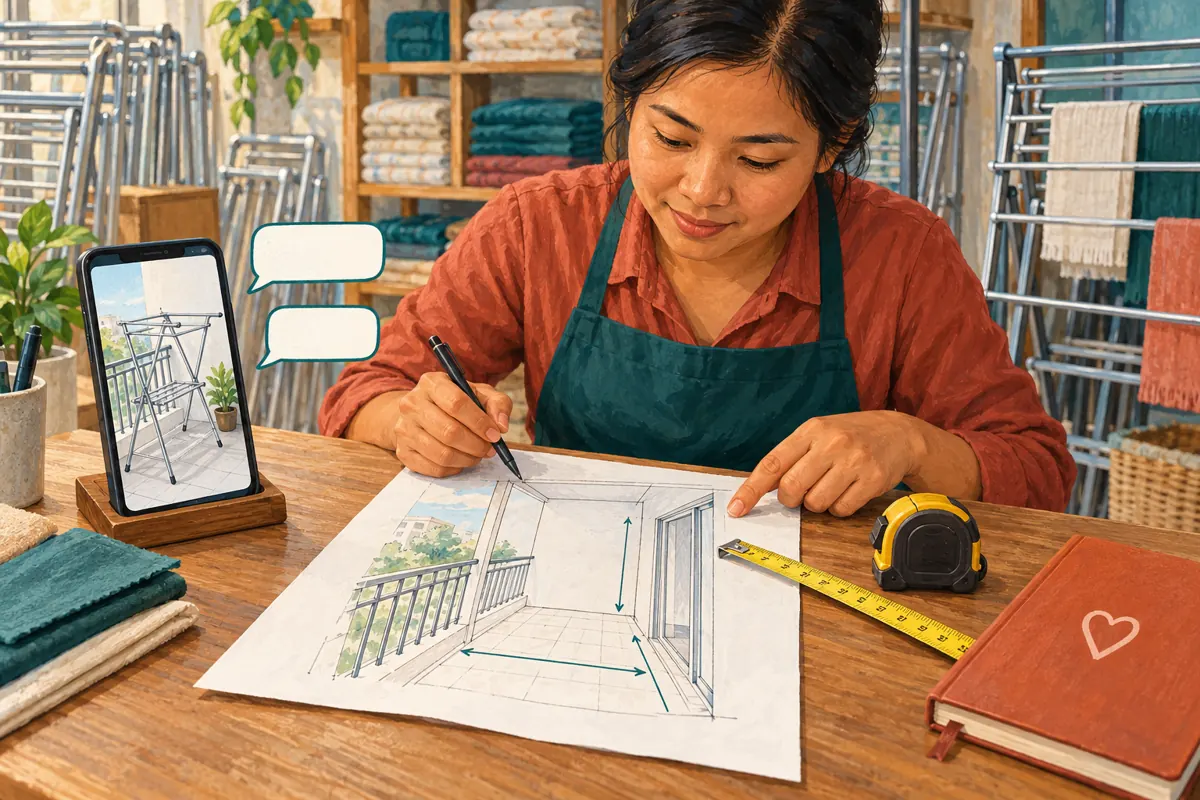
Consider a hypothetical Phnom Penh household choosing a rack for a narrow balcony. The buyer has seen a photograph of the folded product and asks whether it is suitable. A general answer such as “good for small homes” leaves the uncertainty unresolved. A demonstration showing the actual model fully opened, with the doorway in view, gives the buyer something concrete to compare against their own space. The example is illustrative, not evidence of a particular customer's experience.
2. Use YouTube Trends as an idea source
YouTube's official guidance directs creators to YouTube Studio, then Analytics, then Trends. Explore the available suggestions or enter a topic, and save relevant searches. Some insights depend on country, language, and device, and sections may be absent when relevant material is unavailable. YouTube also notes an ongoing Studio interface update, so the arrangement on your account may differ.
For this exercise, prepare a short list of possible phrases before searching: folding drying rack, balcony drying rack, and drying rack storage. These are proposed research inputs, not claims about popular searches in Cambodia. Add Khmer expressions that your staff actually hear, keeping the original wording beside any English translation. The official reference for the feature is https://support.google.com/youtube/answer/11962757?hl=en.
3. Turn a broad suggestion into an answerable question
YouTube describes a content gap as a search with insufficient quality results, including missing, poorly matched, or outdated material. Treat that as a prompt to investigate. It does not establish that Cambodian households want your specific rack or that a video will generate orders.
Write each promising idea as a question your shop could answer with the product in hand. “Small balcony ideas” is too broad for a straightforward product demonstration. “Where should I measure before opening this rack beside a balcony door?” is much more manageable. It identifies a physical action, a setting, and a useful outcome.
Create a brief research note containing the phrase, the date, what you observed, and the question you propose to answer. Keep observation and interpretation separate. “A related suggestion appeared” records what happened. “Our customers need this model” is a business conclusion requiring other evidence.
4. Check the idea against Cambodian shop enquiries
Review recent, genuine questions that staff can access legitimately. Look for recurring uncertainty about doorway clearance, folded storage, rail width, or the difference between similar models. Summarize the question without copying names, phone numbers, home photographs, or private conversations into the planning document. A short anonymous note is usually enough to guide the next demonstration.
Next, check whether the shop can answer the question accurately with current stock. If the suggested topic concerns a wall-mounted system and you only sell freestanding racks, do not stretch the connection. Either choose a relevant question or postpone the idea. A hypothetical Siem Reap shop might discover that buyers repeatedly ask about storing a rack behind a door. That could justify a folded-size demonstration even when the broader research topic concerns balcony use. Local relevance comes from the actual question and product match.

5. Choose the video with a simple decision process
Use three gates: relevance, evidence, and readiness. Relevance means the question helps someone assess a product you sell. Evidence means you can demonstrate the answer and distinguish measured facts from assumptions. Readiness means the correct model, filming space, staff member, and enquiry instructions are available. Proceed when all three are satisfied; resolve the missing element when one fails.
Suppose a hypothetical shop is considering two ideas: a dramatic drying-speed comparison and a doorway-clearance demonstration. The first would require a defensible comparison of conditions and materials. The second can show a concrete spatial relationship using the actual product. If the shop cannot support the drying claim, the clearance video is the more useful production choice. This decision process prevents a visually attractive topic from becoming an unsupported product promise.
6. Film the measurement that answers the question
Arrange the demonstration around the buyer's uncertainty. Begin with the rack fully opened in the intended setting. Show the model identifier, establish the doorway position, and then measure the widest relevant points. Keep the ends of the tape visible long enough for viewers to understand what is being measured. Explain whether the measurement covers the feet, upper rails, or another projecting part.
Show the door moving through its normal opening path, then show the space beside the rack. Add ordinary garments if their overhang changes the practical clearance. Finish with the folded rack so viewers can distinguish storage space from operating space. Use the manufacturer's instructions for setup and loading, and avoid inventing a universal clearance allowance. A demonstration of one arrangement cannot establish suitability for every balcony, floor surface, or household.
7. Make the Khmer explanation and product details agree
Plan the spoken explanation in the language your intended buyers understand. For a Khmer-speaking audience, explain the measurement in Khmer while retaining genuine model names where needed. Have another staff member check that the narration, on-screen measurement, and written product details refer to the same dimension and unit. Do not let an English supplier term turn into a different product claim during translation.
Give the video a title that promises the answer it actually contains, such as a check of open width and doorway clearance for the named model. Avoid calling it suitable for every small balcony. In the accompanying information, ask interested buyers to provide their available floor width, door opening direction, and preferred model. Explain that those details support a fit discussion; they do not reserve stock or confirm delivery.

8. Decide whether an SMM service belongs in the plan
One supplied public listing is “YouTube Like ~ Max 5k ~ 5k/days ~ Instant ~ 𝗥𝗘𝗙𝗜𝗟𝗟 30D”. Its title presents it as a YouTube likes service. The supplied description is empty, so the title's quantity, timing, and refill language should not be treated as independently verified performance or contractual detail. Nothing supplied establishes Cambodian viewers, buyer interest, or a method compatible with platform rules.
YouTube prohibits artificially increasing views, likes, comments, and other metrics, and says a hired promoter's actions can affect the channel. Review its policy at https://support.google.com/youtube/answer/3399767?hl=en-419 before considering any provider. Do not use artificial engagement to test this video idea. Purchased engagement cannot establish genuine interest, sales, ad delivery, or Cambodian audience origin. For this workflow, better footage, accurate measurements, and staff time answering real fit questions are more directly connected to the business problem.
9. Promote the answer where it is relevant
Once the demonstration is checked, use it when responding to a genuine question about that model's fit. Introduce the link with a brief explanation of what the viewer will learn. For example, say that the video shows the rack open beside a doorway and explains which dimensions to compare. This gives the recipient a reason to watch without promising that their home will accommodate it.
Keep the enquiry route consistent wherever you share the video. Staff should know which model appears, where to find the current product details, and how to handle an uncertain measurement. If the shop changes supplier or receives a similar-looking model with different dimensions, review the demonstration before reusing it. An old video can remain visually convincing while becoming unsuitable for a new stock item.
10. Review usefulness without confusing it with popularity
Set a review date that fits the shop's normal enquiry cycle. Record whether genuine viewers ask more specific fit questions, send the requested dimensions, or still confuse open and folded size. These observations help identify the next content improvement. They are not automatically attributable sales results: a buyer may also have visited the shop, spoken to staff, or compared other information.
Common mistakes include interpreting an absent research suggestion as no demand, copying another creator's demonstration instead of investigating the buyer's question, and using folded dimensions to imply operating clearance. Another is treating a rise in likes as proof that the explanation worked. If enquiries still show the same misunderstanding, revise the relevant shot or wording. Preserve a simple record of the change so staff know which version answers the question accurately.
Frequently asked questions
What if YouTube Trends shows little useful information for our shop?
Keep the limitation in your notes and use genuine customer questions to choose a demonstration. Missing research information is not proof that nobody needs the answer. Avoid replacing a relevant local question with an unrelated topic merely because the unrelated topic appears in the tool.
Should we research in Khmer or English?
Begin with expressions your intended buyers use. English product terminology can provide additional ideas, but review its meaning before adapting it. Keep separate notes for each phrase rather than assuming translated expressions reflect identical needs. The final demonstration should use language your audience can follow.
Can we say a rack fits small Cambodian balconies?
That statement is too broad without defining the space and conditions. Show the actual model's dimensions and the demonstrated arrangement instead. Explain which measurements the buyer should compare, including doorway movement and projections. Ask for more information when a buyer's layout remains unclear.
Would buying likes help confirm that we chose the right question?
No. Purchased likes cannot tell you whether a Cambodian buyer understood the measurement or needs the product. They also do not establish genuine interest or sales. Evaluate the question through relevant enquiries and the accuracy of the explanation, while respecting YouTube's rules against artificial engagement.
What should we change if viewers still ask whether the rack fits?
Find the unresolved detail before refilming everything. Perhaps the tape ends are hidden, the door never moves, or the folded view appears before the open view without explanation. Correct that specific issue. A household with an unusual layout may still need an individual discussion even after a clear demonstration.
Explore the current service catalogue, create an account, or ask a specific question through support tickets.
Prepared with AI assistance. Illustrations explain the workflow and do not represent customer results.