19/10/2026 11:55
What Should Viewers Ask? YouTube Pinned Comments for Cambodian Water-Pump Shops

A water-pump demonstration can show the product clearly while leaving viewers unsure what to ask next. Someone comments “How much?” without identifying the model. Another asks whether it will work at home but gives no context. For a Cambodian shop promoting its products through YouTube, a carefully written pinned comment can make that first conversation easier. It gives interested viewers a short enquiry format and explains what the shop still needs to check. This workflow uses a hypothetical Cambodian water-pump retailer throughout. It focuses on preparing useful conversations, keeping private information out of public replies, and deciding why an SMM-panel engagement service cannot replace those steps.
1. Give the pinned comment one specific job
Start with the question that repeatedly slows down your replies. For a pump demonstration, that might be identifying which product the viewer means. If the video compares several models, asking for the model name or the moment where it appears can resolve confusion before anyone discusses price. If the video features one product, asking about intended use may be more useful.
Write down the comment’s purpose in one sentence: help viewers identify the demonstrated pump and explain what they want to do with it. Keep discounts, delivery announcements and general subscription requests out of this particular message. A comment that tries to perform every sales task becomes another block of information shoppers must interpret. The practical test is whether a staff member could use a viewer’s answer to choose the next sensible question.
2. Check access and understand the visibility limits
YouTube requires advanced-feature access to pin comments. Its official instructions say to sign in, find the relevant comment beneath the video, open More, select Pin and confirm. You can pin your own comment or a viewer’s; pinning another replaces the existing selection. Newly enabled advanced features may take up to 24 hours to appear. These details come from YouTube Help’s “Post & interact with comments,” listed in the sources.
On mobile, viewers must expand the comments to see the pinned entry. Pinning also does not guarantee placement in the comment preview. Therefore, treat the pin as support for the demonstration. Keep essential product identification in the video and description as well. During filming, a simple invitation to open the comments for enquiry guidance can explain where to go without promising that every viewer will notice it.
3. Ask for the smallest useful amount of information
For this hypothetical shop, the initial enquiry needs three things: the product being discussed, the intended task and the viewer’s main question. Intended tasks might include garden watering or moving water into a storage tank. These examples describe what the customer wants; they do not establish that the demonstrated pump is suitable. Staff should make that distinction explicit when replying.
Avoid turning the comment into a technical questionnaire. A new shopper may not know the terminology or have measurements available. Offer an easy alternative: describe the task in ordinary words, and the shop will explain what information is needed next. Ask for a province or general service area only when it helps answer a delivery question. An exact home address, telephone number or payment record is unnecessary for the public opening conversation.
4. Draft a comment that sets expectations
A hypothetical English draft could read: “Asking about a pump in this video? Tell us the model shown, what you want to use it for, and your main question. If you do not know the model, describe the pump or mention where it appears. Please keep phone numbers, addresses and payment details out of comments. We will explain what needs checking before recommending a model or preparing a quote.”
Adapt the actual customer-facing version to the language your viewers use. A shop serving mainly Khmer-speaking customers should prepare natural Khmer wording and have a fluent staff member review it. Preserve model codes exactly so the enquiry still matches the product. Read the draft aloud: if it sounds like an application form, simplify it. The invitation should make asking easier while leaving room for customers who are unfamiliar with pumps.
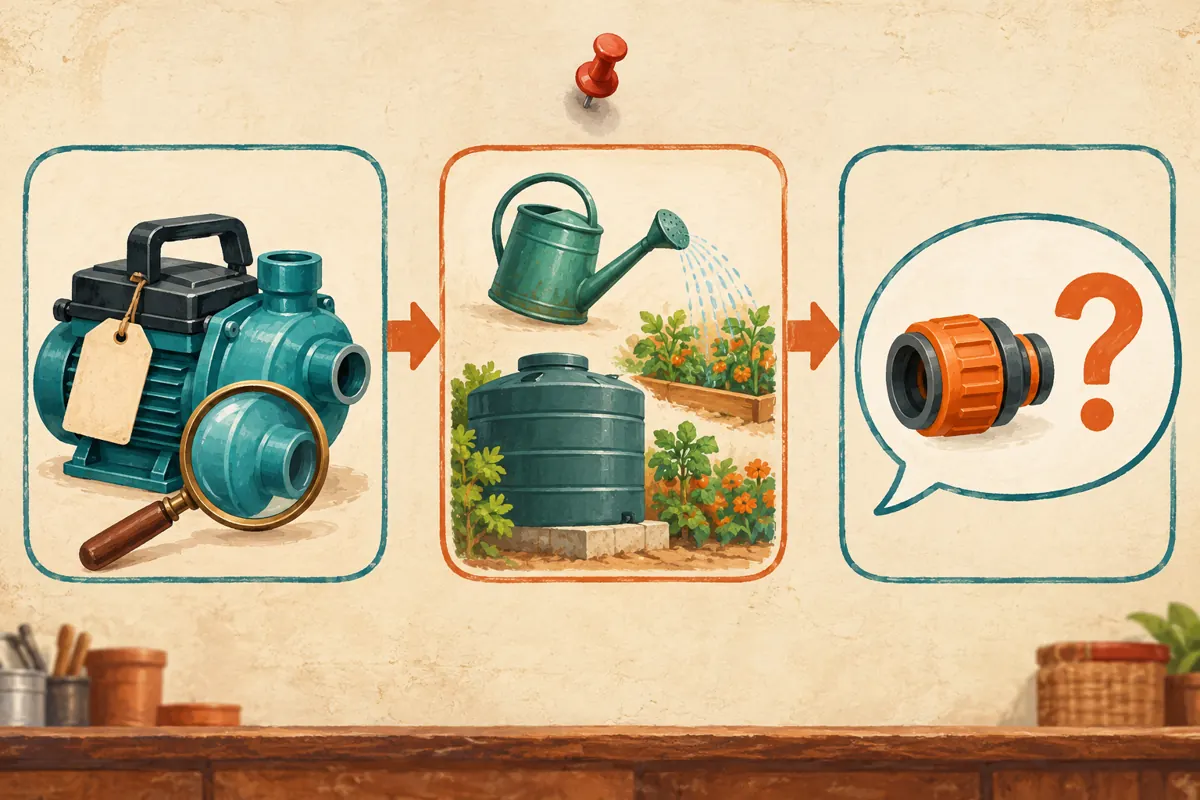
5. Test the whole enquiry route on a phone
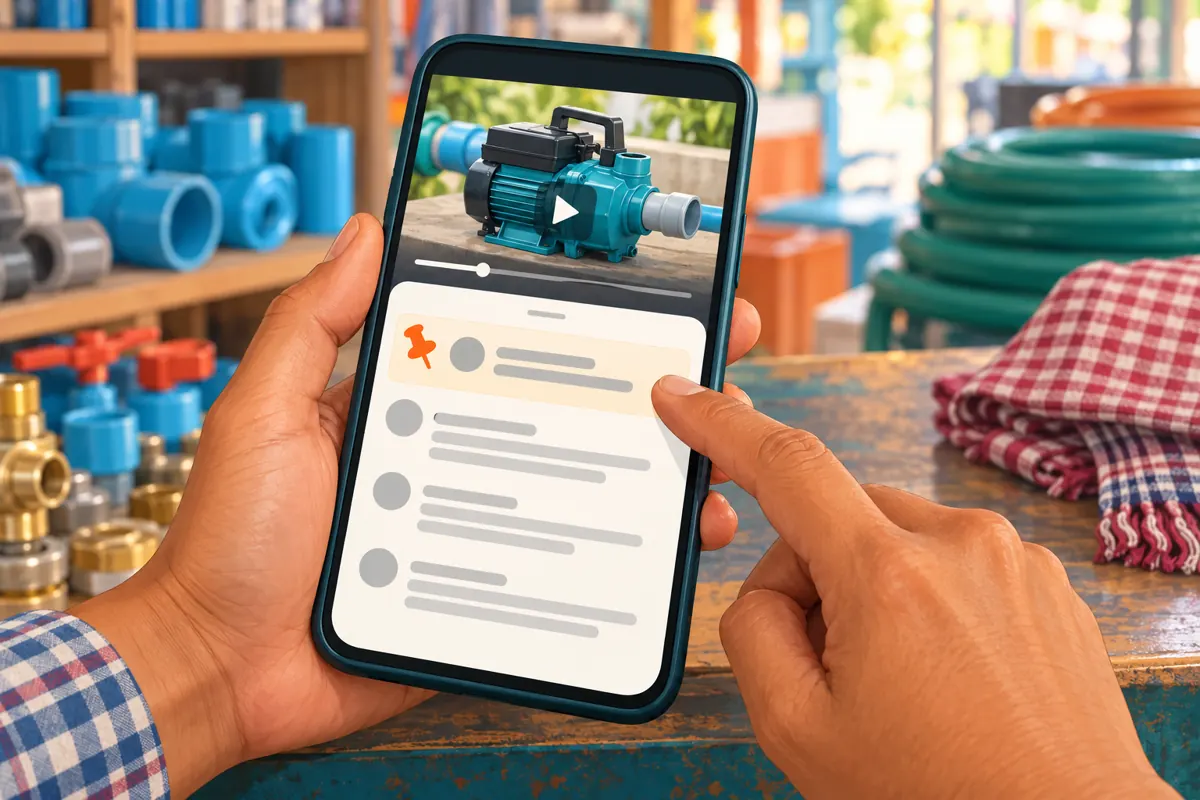
After pinning, open the public video on a phone and expand its comments. Check that the intended message is selected, the opening sentence is understandable and the model reference matches what appears on screen. Read it as someone who has never visited the shop. A phrase such as “send us the usual details” may make sense to regular customers but gives a new viewer no usable instruction.
Then test the next step operationally. If your reply will direct customers to a business contact listed in the description, confirm that the destination is correct and someone monitors it. Use a draft enquiry internally rather than posting invented customer interest. Ask a colleague to follow the instructions and explain where they hesitated. Fix that point before sharing the demonstration more widely.
6. Turn incomplete replies into manageable conversations
Suppose, hypothetically, a viewer replies, “The blue one for my garden.” The shop now knows the general task but still may not know which product the viewer means. A useful response asks one clarifying question: “Do you mean the pump shown beside the hose reel?” After the product is identified, staff can explain which further details are needed to assess the request.
If another viewer posts only “Price?”, answer what you can responsibly confirm. Where several models appear, ask which one they mean. Where a current price is verified, state what it covers and distinguish optional accessories or delivery costs when relevant. Avoid withholding every answer behind a demand to contact the shop privately. Public replies can remain helpful while individual quotations move to an appropriate business contact.
7. Keep product guidance separate from a confirmed quotation
A pinned comment begins a conversation; it does not approve a product choice. In this workflow, staff should distinguish an initial enquiry, a request awaiting details, and a quotation ready for customer review. A viewer describing garden watering has not supplied enough information for the shop to promise suitability. The demonstration itself may show only one particular setup.
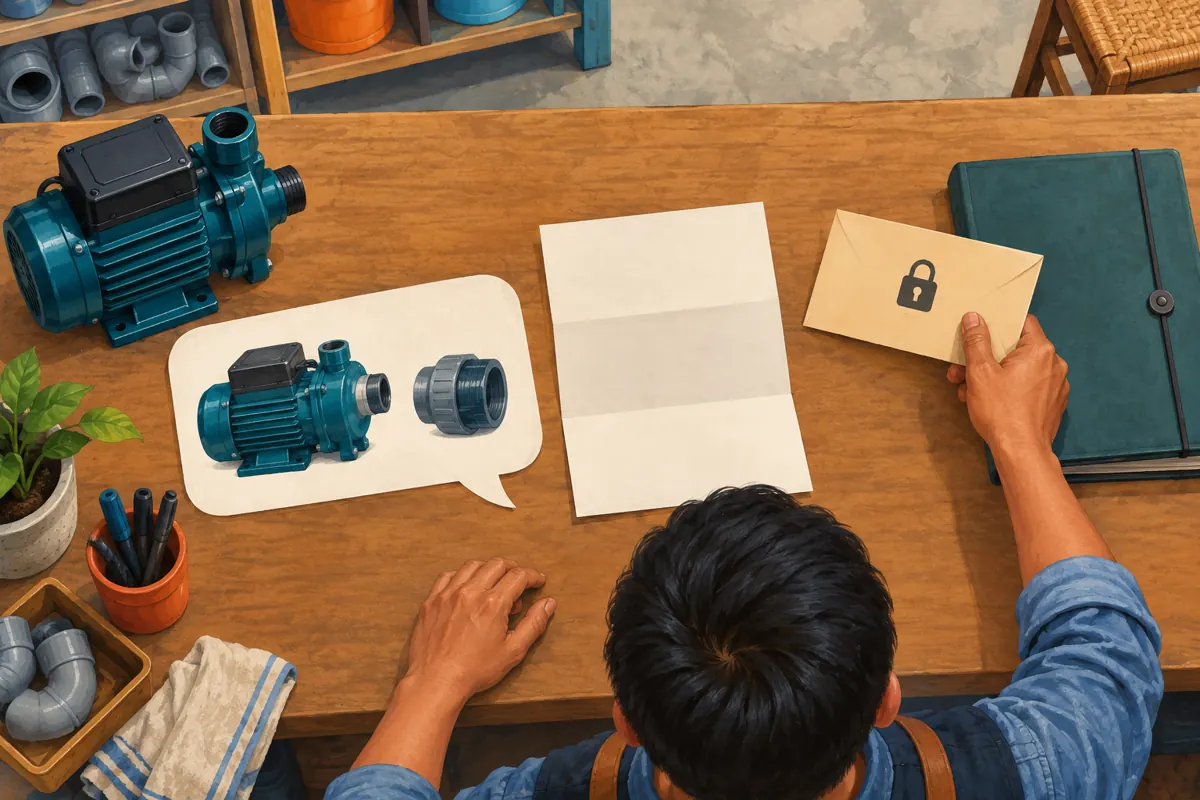
When the conversation requires photographs, detailed site information or contact details, explain the reason for moving it to the shop’s established private contact. Ask only for information relevant to the next decision. Carry over the video reference and model so the customer does not have to restart. Before quoting, confirm the selected product, included items, current availability and delivery arrangements. Do not treat a public expression of interest as a reservation.
8. Make the SMM-panel decision before spending
The supplied catalogue includes the exact service name “YouTube Like ~ Max 5k ~ 5k/days ~ Instant ~ 𝗥𝗘𝗙𝗜𝗟𝗟 30D”. Its title identifies a likes-related offering, but the supplied description is empty. The speed, quantity and refill wording are catalogue claims, not verified promises in this article. The listing provides no supporting description establishing Cambodian viewers, product interest or suitability for this enquiry workflow.
YouTube’s Fake engagement policy prohibits artificially increasing engagement metrics and warns that a hired promoter’s actions can affect a channel. It also prohibits promoting services that artificially inflate metrics. Review that official policy before considering any such purchase; do not put an artificial-engagement promotion in the pinned comment. The policy is linked in the sources.
For the shop’s actual objective, purchased engagement cannot establish genuine interest, sales, ad delivery or Cambodian users. A higher like count would not tell staff which pump a person needs. The sensible decision here is to put effort into the demonstration, the enquiry prompt and the response process. Keep any existing panel delivery record separate from evidence about customer questions or confirmed orders.
9. Maintain the pin without creating conflicting instructions
Assign one person to own the pinned message and another to cover absences. Record the video reference, the approved comment wording and the business contact used for follow-up. Review the message when a featured model changes, a contact route changes or staff repeatedly receive the same confused response. A stable enquiry prompt usually needs fewer revisions than a comment containing short-lived offers.
Before replacing the pin, check what information the current one provides. A new promotional message could displace a useful clarification that viewers still need. If a demonstration contains a material error, assess the video and description too; a pinned note should not carry the entire correction burden. After any change, reread the customer route from the video through to the person preparing the quotation.
10. Review usefulness and avoid common mistakes
Review a small set of actual enquiries and note what was missing at the start: product identity, intended use, pricing context or a workable follow-up route. Record how staff resolved each gap. This gives you a concrete editing decision. If viewers repeatedly cannot identify the model, improve how the video shows it. If they misunderstand included accessories, clarify the demonstration and the quotation wording.
Avoid claiming that the pin caused sales simply because orders arrived after it was added. Customers may have encountered the shop elsewhere. Other common mistakes include asking for private details publicly, promising an immediate reply when nobody is available, using the pin as a keyword list, and presenting a customer’s praise as representative proof. Judge the message by whether it helps staff and viewers reach a clearer next step.
Frequently asked questions
Should the shop pin its own instructions or a customer’s question?
For this workflow, the shop’s own instructions are usually easier to maintain and less dependent on one person’s circumstances. A genuine customer question may be useful when it captures a common uncertainty, but review its wording and context before highlighting it. Do not manufacture a customer question or use an isolated compliment as evidence of typical results.
What should we do if viewers still ask only for the price?
Check whether the video makes the product identity obvious and whether the pin asks too much. Answer verified pricing questions directly where possible, then ask only for the missing detail needed to continue. Some customers will prefer short messages regardless of the prompt. The aim is to reduce avoidable confusion, not require everyone to follow a rigid format.
Can we say the demonstrated pump will suit a viewer’s home?
Do not infer suitability from a brief comment or from the demonstration alone. Treat the enquiry as a starting point and explain what a knowledgeable staff member needs to check. If the shop cannot assess the application confidently from the information supplied, say so and arrange an appropriate assessment before recommending a product.
How can a small team tell whether the pinned message is helping?
Look for practical changes in the conversations: clearer model references, fewer requests to repeat basic context, and more understandable handoffs to the person preparing quotations. Keep examples without unnecessary personal information. These observations can guide revisions, but they do not prove that pinning increased demand or caused a sale.
What if the channel cannot pin a comment yet?
Use clear enquiry instructions in the video description and ordinary replies while checking the channel’s feature access through YouTube’s official guidance. Do not delay useful customer answers solely because pinning is unavailable. Keep the same product-identification and privacy principles, and test the route again if the feature later becomes available.
Explore the current service catalogue, create an account, or ask a specific question through support tickets.
Prepared with AI assistance. Illustrations explain the workflow and do not represent customer results.