22/10/2026 01:54
Did “Foot Only” Survive Translation? Telegram Checks for Cambodian Sewing-Machine Parts Shops

A translated product post can sound fluent while leaving a buyer uncertain about what comes in the packet. For a Cambodian sewing-machine parts shop, the difference between a presser foot alone and a foot supplied with its mounting screw matters more than an attractive caption. Model references, fitting conditions and quantities need to survive the journey from the original message to the version a reader sees. Before promoting a Telegram post or considering an SMM-panel service, check that journey. The following workflow uses a hypothetical parts shop to show how to prepare the original, inspect translation, resolve ambiguity and guide buyers toward a useful enquiry.
1. Choose one buying misunderstanding to prevent
Start with a question your counter staff can answer from the actual product: does this offer include the mounting screw? That creates a focused review. A general instruction to check the translation is easy to complete superficially; a specific question forces the reviewer to identify what the buyer would receive. Other useful checks include whether the item is sold individually, whether an adapter is required, and whether compatibility is confirmed or still needs inspection.
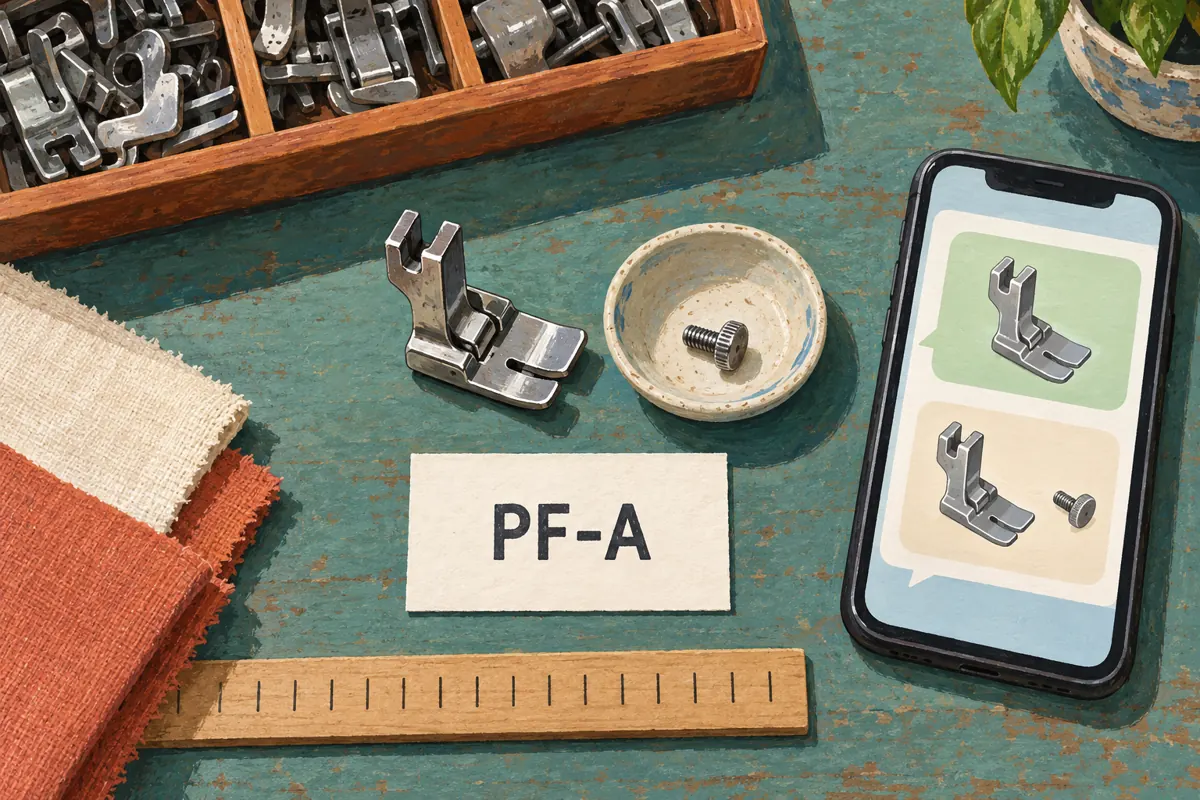
In our hypothetical Phnom Penh shop, the seller uses PF-A as an internal reference for one presser foot. This is an invented example, not a manufacturer's model or a compatibility recommendation. The offer includes the foot only. Staff want enquiries from people who can provide their machine model and a mounting-area photo, rather than messages assuming that every machine uses the same attachment.
2. Identify which translation experience you are checking
Telegram documents individual-message translation through the message menu after translation is enabled under Settings > Language. Excluded languages can hide the Translate option, and available languages depend on the phone's operating system. Check the actual device and language pair before building customer instructions around it. [Telegram message translation guide](https://telegram.org/blog/reactions-spoilers-translations).
Telegram also documents whole-chat translation for Premium users. Separately, eligible channels can enable auto-translation for visitors, with a translation bar that lets readers return to the original. Channel access to this feature relates to boosts; inspect the channel's available settings rather than assuming it is enabled. [Whole-chat translation](https://telegram.org/blog/profile-pics-emoji-translations) and [channel auto-translation](https://telegram.org/blog/gift-marketplace-and-more).
These are different review situations. Record whether your colleague used a single-message action or viewed an automatically translated channel. A successful check on one phone is useful evidence about that test, but it does not establish that every buyer will see identical wording.
3. Write an original message that stands on its own
Prepare the source post in the language your intended customers can comfortably read. For a Khmer-speaking customer base, have a competent Khmer writer prepare the original while retaining genuine product codes. Use short sentences with explicit subjects. Avoid a caption such as “Same one, no extra, fits that type,” because readers and translation systems lack the conversation that explains those references.
An English rendering of the hypothetical source could read: “Reference PF-A. The offer includes one presser foot. The mounting screw is sold separately. Compatibility must be checked before ordering. Send your machine model and a clear photo of the mounting area.” Keep stock and collection information in separate sentences. This structure makes each promise easy to inspect and gives staff a clear basis for answering follow-up questions.
4. Give product identity a stable reference
Keep the internal reference identical in the photo description, message and enquiry reply. Do not translate PF-A into a descriptive nickname or silently replace it with a supplier's code. If both codes are needed, label their roles. A shop reference identifies the seller's item; a machine model identifies the buyer's equipment. Neither should be presented as proof that the two fit together.
Build a small reference note beside the draft: product name, internal code, package contents, measurement units, exclusions and unresolved fitting questions. Use actual photographs of the item when publishing the shop's offer. Show a separate screw separately, and explain whether it is included. An attractive image containing several accessories can otherwise contradict a technically correct caption.
5. Compare meaning in a fixed order
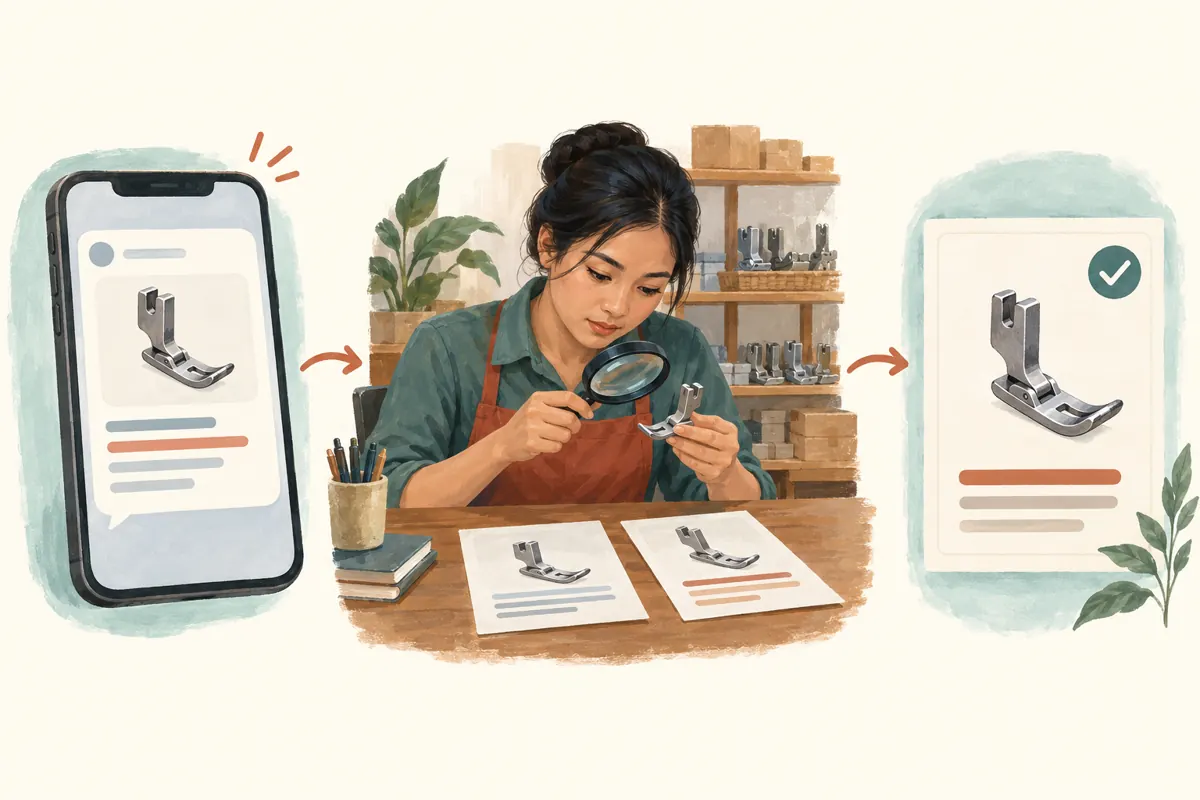
Open the draft in a private staff review space and inspect the translation available on the test device. Compare product identity first, then quantities and units, then exclusions, compatibility and the requested next action. This order prevents a smooth opening sentence from distracting the reviewer from a changed condition near the end. Keep the original available throughout the check.
Ask concrete questions: is the screw still separate? Does “must be checked” remain conditional? Is the buyer being asked for a machine model rather than a delivery address? Have a person who understands both languages and the product assess uncertain passages. Translating the result back into the original language can suggest questions, but it is not independent proof of accuracy. Record the problematic phrase and its practical consequence.
6. Decide whether to simplify, explain or pause
When the meaning is unclear, first simplify the original sentence without removing the condition. Replace “accessories extra” with a precise statement about the screw. Replace “fits usual machines” with the evidence the shop actually has, or state that fitting needs confirmation. Then repeat the same review. Do not solve a translation problem by making a broader product claim.
If an essential distinction remains unreliable, add a carefully reviewed explanation in the relevant language or prepare a separate approved language version. Keep the product reference consistent across versions. Pause promotion when the uncertainty could change what someone orders. If the issue is only a harmless stylistic difference, document it and move on. The decision depends on buyer meaning, not whether every word matches literally.
7. Test the enquiry a reader would send
Ask a colleague unfamiliar with the draft to read it and describe what they would receive. Then ask them to compose an enquiry using only the information in the post. If they ask “Does everything in the picture come together?”, the offer needs another pass. If they send the reference and ask which machine photo is needed, the next step is clearer.
For the hypothetical shop, a useful prompt is: “Send reference PF-A, your machine model and a clear photo of the mounting area.” Ask customers to photograph equipment while it is switched off and avoid requesting unnecessary personal details. A buyer in another Cambodian province may need shipping information later, but location does not resolve compatibility. Separate the fitting question from collection or delivery arrangements.
8. Put SMM-panel decisions after the meaning check
The supplied catalogue includes the exact public service name “Telegram Post Views ~ Max Unlimited ~ 10M/Days ~ INSTANT”. Its title presents it as a post-view service; the supplied description is empty. Treat the remaining title wording as catalogue claims, not independently verified delivery conditions. Nothing supplied establishes translation support, Cambodian audience origin, genuine interest or an official Telegram relationship.
A post-view service cannot repair an ambiguous package description. Purchased engagement is not evidence of sales, ad delivery, local buyers or understanding. Before any service decision, review current platform rules and the provider's documented terms. If a relevant condition is missing, leave it unresolved rather than guessing. It is reasonable to decide against an order and spend the effort improving the product explanation instead.
Keep any panel delivery record separate from the translation review. One records a service request and its reported status; the other records what the post meant on a tested device. Combining them into a claim that promotion proved the translation worked would overstate the evidence.
9. Correct misunderstandings where they occur
If an actual enquiry reveals confusion, answer the buyer's specific question first. Confirm the package contents and unresolved compatibility before discussing an order. Then revisit the public wording that produced the misunderstanding. A private clarification helps one person; a clearer source post helps subsequent readers encounter the intended conditions.
Maintain a short editorial note with the post reference, the wording changed, the reason and the review date. If staff have prepared another language version, check that version too. When a service request already refers to the post, preserve the request record and consult documented procedures before changing its target. Do not assume that editing content automatically changes an external service request.
10. Review useful evidence and avoid familiar mistakes
After publication, look for the kinds of questions people ask. Enquiries that include the item reference and machine details are more actionable than vague requests for “the same thing.” This does not prove a translation caused the improvement. It gives the shop concrete examples to examine alongside the wording, photographs and staff replies.
Common mistakes include relying on a translated product nickname, using a photo of a complete set for a single-part offer, treating fluent language as verified fitting advice, and assuming a high view count means the message was understood. Another is testing only the opening sentence. Preserve the review habit for the entire offer, especially exclusions and conditions. Finish each review with a practical decision: publish, revise or hold for someone who can resolve the remaining uncertainty.
Frequently asked questions
Should our Cambodian shop replace Khmer posts with English so translation is easier?
Choose the original language around the people you serve and the language your team can review accurately. Do not switch solely because a translated preview sounds polished. A carefully written Khmer original with stable model references may be more useful for your customers. Where a second language is necessary, have the important conditions reviewed rather than relying on fluency alone.
What should we do if the required translation language is unavailable?
Provide a human-reviewed explanation in a language the buyer understands, or ask a qualified colleague to help. Do not tell customers that a particular device will offer a language you have not tested. Keep the product reference and package contents visible in the original, and postpone any purchase decision that depends on unresolved meaning.
Can a clear photo replace a translated compatibility statement?
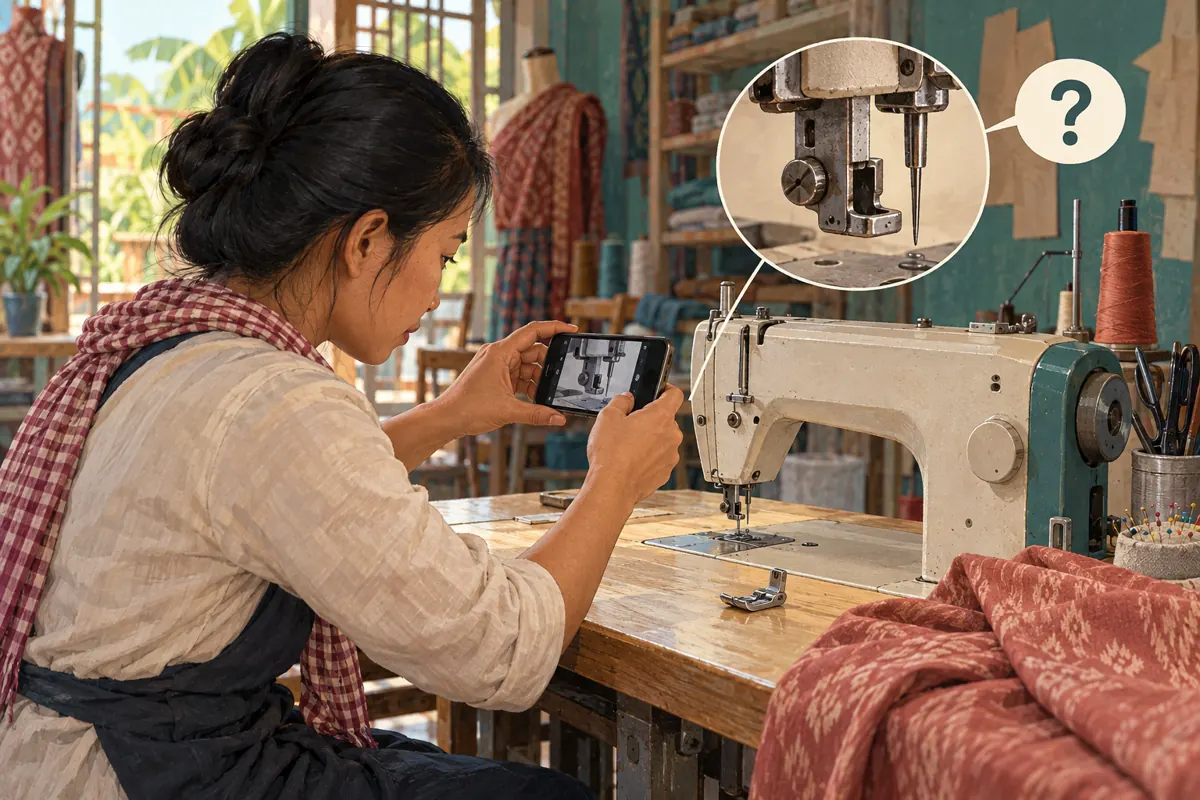
A photo can show shape, attachments and package contents, but it cannot reliably establish every fitting condition. Two parts may look similar while differing in a detail the image does not reveal. Use the photo to support a specific question and let knowledgeable staff confirm the fit from appropriate product information. Avoid turning a visual resemblance into a compatibility promise.
Does a successful test mean channel auto-translation is safe to leave unchecked?
Treat the test as a review of that message and viewing setup. Recheck when the offer changes, particularly if a new item, quantity or exclusion is introduced. Save a brief record of the wording reviewed. The practical goal is to catch changes that affect a buying decision, without requiring staff to investigate every harmless variation in phrasing.
Should we buy views to find out whether the translation works?
No. Purchased views do not provide a dependable comprehension test or establish Cambodian demand. Start with a reader who can explain the offer back to you and identify what information is needed next. Later, examine genuine enquiries for recurring misunderstandings. Keep those observations separate from any panel order record, and do not present service delivery as proof that customers understood or wanted the product.
Explore the current service catalogue, create an account, or ask a specific question through support tickets.
- Telegram: Reactions, Spoilers, Translation and QR Codes
- Telegram: Profile Photo Maker, Translating Entire Chats, Emoji Categories and More
- Telegram: Gift Marketplace, Posting Several Stories at Once, Auto-Translate For Channels
Prepared with AI assistance. Illustrations explain the workflow and do not represent customer results.