21/10/2026 22:44
Still Renting That Set? Instagram Archive Decisions for Cambodian Picnic Rental Shops

A beautiful picnic photograph can keep attracting questions after the pictured package has changed. The basket may still be available, but the cushions, serving dishes or delivery arrangement may no longer match. For a Cambodian rental shop, that creates a practical problem: should the Instagram post remain visible, receive a correction, or be archived? The answer depends on what a customer would reasonably expect to receive. This guide uses a hypothetical Phnom Penh picnic-set rental business to build a repeatable review process, from checking old photographs to preparing current promotion. It also explains why an SMM panel service cannot resolve an inaccurate offer or establish genuine rental demand.
1. Identify the promise inside the photograph
Begin with the image, before reading its caption. List everything that appears to belong to the package: basket, mat, cushions, cups, tableware, flowers and any setup service implied by the scene. Then compare that list with what the shop can actually supply. A photograph of a fully arranged picnic may suggest a complete experience even when the rental covers only equipment collected from the shop.
In the hypothetical example, the shop still rents its woven baskets and mats, but the patterned cushions in an older photograph have been retired. The flowers were borrowed for the shoot, and transport was never included. Those are three different issues. Retired equipment affects whether the picture represents the offer; decorative props need clear explanation; collection arrangements belong in the booking information. Do not treat all three as a vague availability disclaimer.
2. Choose between keeping, updating and archiving
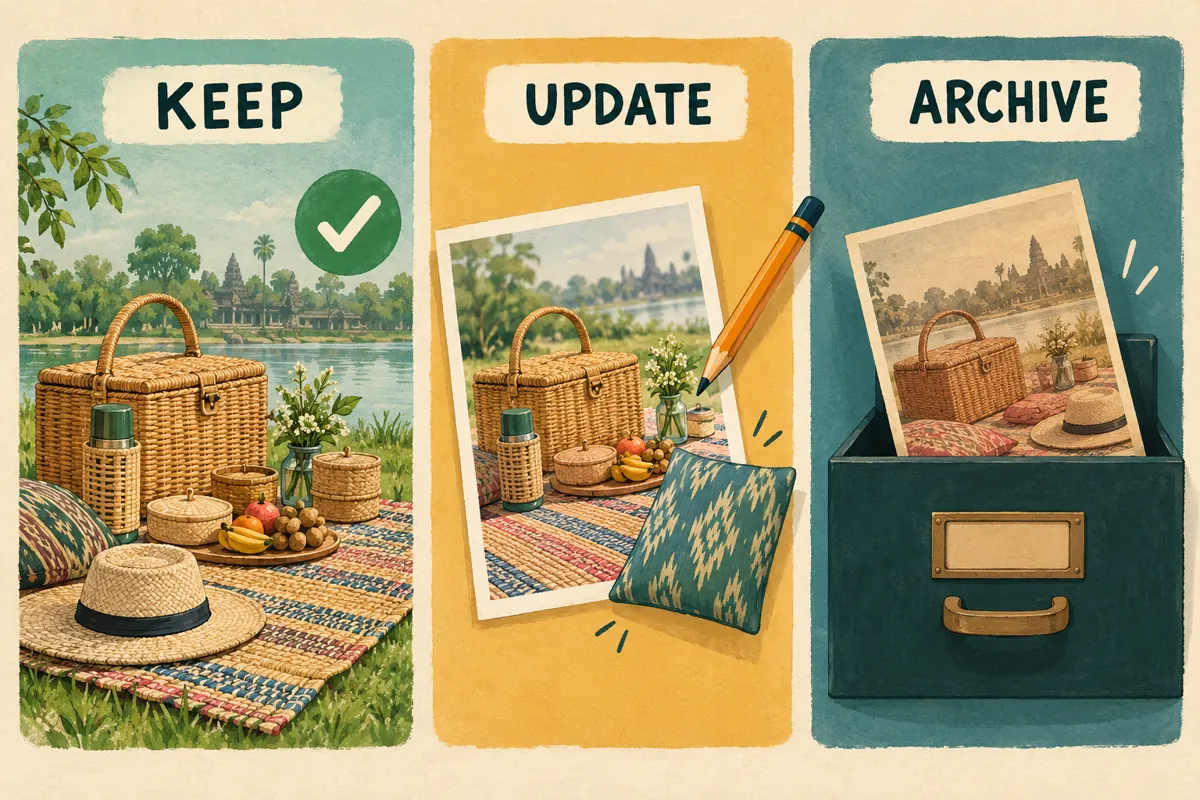
Keep a post when its main promise remains accurate and it helps customers understand the rental. Update it when a small, clearly explainable change can be communicated without contradicting the image. Consider archiving when the central package is unavailable, the photograph creates a materially wrong expectation, or the offer needs a replacement that customers can understand immediately.
Use this decision question: could a customer choose this package from the picture and receive substantially what they expected? If the answer depends on explaining several substitutions, a new photograph is usually more useful. However, a set being booked for one Saturday does not necessarily make its catalogue photograph obsolete. Date availability and permanent package changes require different responses.
Write down the reason for the decision. “Archive because the pictured cushion set is retired” gives the next staff member something concrete to check. “Clean up the page” does not.
3. Understand what the Archive action addresses
Meta’s official announcement describes Instagram Archive as a way to move previously shared feed posts into a space visible only to the account owner and later display them on the profile again. It documents using the post menu to choose Archive and the archived post menu to show it on the profile. Source: https://about.fb.com/ja/news/2017/06/instagram_archive/
That announcement dates from 2017, so treat its interface illustrations as historical. In the current app, follow the options actually displayed for your account and content type. This workflow concerns feed posts; do not assume every other Instagram format has identical controls.
For the shop, archiving is a visibility decision. It does not update the stock list, cancel an agreed rental or tell an existing customer that their package has changed. Those tasks need their own follow-up. Keep the original photographs and business records separately so that Instagram is not the only place holding essential information.
4. Review one post and its business connections
Before hiding a post, record its identifying photograph, package name, public link and reason for review. Check whether staff have recently sent that link to customers, whether it appears in a promotional draft, and whether a quotation refers to the pictured arrangement. The aim is to find people and materials that still depend on the old offer.
Suppose a customer has asked about the old cushion pattern but has not confirmed a booking. Send the current package photograph and explain the difference before requesting a decision. If a booking already exists, review the agreed items directly with that customer. Changing public content does not change the terms they previously accepted.
Start with one post rather than a large group. After the action, inspect the profile from a separate ordinary viewer account, where appropriate, and check what a visitor can still understand about the available sets.
5. Prepare the replacement before directing new attention
Photograph the current rental kit with its included pieces clearly visible. Keep decorative extras outside the main arrangement, or identify them explicitly in the accompanying explanation. A simple equipment photograph can answer more booking questions than an elaborate styled scene. Add a second view when it helps explain basket capacity, cushion appearance or the folded size of the mat.
For the hypothetical shop, the replacement caption could explain that the pictured basket, mat, plain cushions and cups form the current equipment package; flowers and food are excluded; customers should ask about their date and collection needs. This is an illustrative structure, not a claim about an actual business or service.
Use the language customers understand. A Cambodian shop serving Khmer-speaking families can prepare Khmer booking information while keeping any genuine model names consistent. If it also uses English, have a competent reader compare both versions for inclusions, exclusions and timing.
6. Keep historical work distinct from current availability
Some old photographs remain useful as examples of styling or previous work. They can show how equipment fits into a small garden, shaded courtyard or indoor gathering. Decide whether the post is a portfolio example or a current package offer. Mixing those purposes creates avoidable uncertainty, particularly when an old caption still invites people to book the exact pictured set.
If keeping a historical example, make its status prominent and explain that current equipment and availability require confirmation. Avoid relying on a correction buried beneath several promotional paragraphs. If the image itself strongly implies an unavailable package, archiving may be clearer than adding increasingly complicated qualifications.
Do not remove useful criticism simply to make the business appear flawless. A content review should address obsolete offers and confusing information. Customer concerns about an actual rental deserve a substantive response and an internal record, regardless of what happens to the promotional photograph.
7. Make a separate decision about SMM panel services
A catalogue entry and a content problem are not interchangeable. The supplied public catalogue includes “Instagram Followers ~ 𝗛𝗶𝗴𝗵 𝗱𝗿𝗼𝗽𝗽𝗲𝗱 ~ Max 500k ~ 100k/days ~ Instant ~ 𝐍𝐎 𝗥𝗘𝗙𝗜𝗟𝗟”. Its title identifies an Instagram follower offering, but the brief provides no supporting description. Treat the other wording as catalogue labels, not independently verified delivery promises or evidence about the people involved.
That entry does not describe archive management, package correction or booking support. It cannot establish that a person wants to rent a picnic set in Phnom Penh. Purchased engagement is not evidence of genuine interest, sales, advertising delivery or Cambodian users. A larger follower count also cannot explain which items come with a rental.
For this scenario, the sensible first investment is staff time: replace the misleading photograph, clarify the offer and answer genuine enquiries. If considering any panel service afterward, review its actual terms and applicable platform rules, and keep its records separate from customer demand.

8. Recheck the package before restoring an old post
A retired package may return, but restoration should begin with an equipment check. Confirm that the basket, fabric pattern, quantities and condition match the old photograph closely enough for the image to be useful. Recheck collection arrangements, delivery options, deposits and any other details stated in the old caption. Do not assume that last season’s operating arrangements still apply.
Assign one person to approve the return. Their note should identify the package, the checks completed and any remaining uncertainty. If the cushions merely resemble the old pattern, take a new photograph instead of asking customers to overlook the difference. A restored post should represent a verified offer, not an intention to rebuild one later.
After making the post visible again, review the complete customer journey: image, explanation, contact instructions and staff response. Prepare a separate, accurate announcement if the business needs to tell customers that the package is available again.
9. Learn from enquiries rather than cosmetic changes
Keep a small enquiry log during the next review period. Record the package requested, whether the customer supplied a date, what information was missing and whether staff needed to explain a substitution. Avoid collecting unnecessary personal details. The useful question is whether people now understand the offer well enough to ask a meaningful booking question.
A hypothetical enquiry such as “Is the plain-cushion set available for collection on Sunday?” is more specific than “Is everything in this picture included?” Neither guarantees a booking, but the difference can guide your next content edit. If people repeatedly ask about flowers, improve the explanation of decorative props rather than assuming the audience is inattentive.
Record other changes that might affect enquiries, such as a new package, a holiday period or different opening arrangements. Without a controlled comparison, do not attribute every improvement to archiving or every decline to a smaller visible portfolio.
10. Avoid the mistakes that create another cleanup
The first mistake is archiving every post associated with a temporarily unavailable date. That can remove useful package information while leaving customers without a clear alternative. The second is keeping an obsolete offer because its photograph looks attractive. Visual quality does not make the contents accurate. The third is using deletion casually when the intention is only to reconsider public visibility; read the selected action carefully before confirming it.
Another common mistake is leaving old package images in staff replies after replacing the public post. Update the materials the team actually uses, including quotation attachments and prepared responses. Finally, avoid treating a fresh-looking profile as proof that promotion succeeded. A useful profile helps people understand the current service; business conclusions still require genuine enquiries and confirmed transactions.
Give the review a practical trigger: equipment retirement, a package redesign, changed collection arrangements or preparation for a new promotional period. This keeps the process tied to business facts.

Frequently asked questions
Should I archive a package whenever it is fully booked for the weekend?
Usually, review the availability message first. A package can remain part of your catalogue while being unavailable on particular dates. Ask customers for their intended date and confirm against the booking record. Archiving becomes more relevant when the package itself has changed or the post can no longer represent what you supply.
Can I keep an old styled photograph if some props are excluded?
Yes, if its purpose and exclusions are clear enough to prevent a reasonable misunderstanding. Identify decorative items prominently and provide a straightforward photograph of the actual rental kit. If the excluded objects dominate the scene, using a new image is likely to explain the offer more effectively than a long disclaimer.
What if a customer refers to a screenshot of the archived offer?
Ask which items and arrangements they understood to be included, then provide the current package details. Check whether an agreement already exists before discussing substitutions. Archiving cannot remove screenshots held by other people, so staff need a consistent explanation of what changed and when.
Will archiving outdated posts improve Instagram reach?
This workflow makes no reach promise. Its purpose is to reduce conflicting information and make current rental options easier to understand. Judge it through the clarity of enquiries and the accuracy of staff replies. Changes in reach can have several causes and should not automatically be credited to archiving.
Should follower services be used after the profile cleanup?
A tidy profile alone is not a reason to purchase a service. Define the business problem first and assess whether the proposed service can address it under its documented terms and platform rules. Follower delivery cannot verify local rental interest, replace clear package information or confirm that a customer will book.
Explore the current service catalogue, create an account, or ask a specific question through support tickets.
- Meta: Instagram introduces Archive for previously shared feed posts (official Japanese announcement)
Prepared with AI assistance. Illustrations explain the workflow and do not represent customer results.