22/10/2026 10:19
Shuttle Pass or Full Setup? YouTube Studio Video Clips for Cambodian Loom Shops
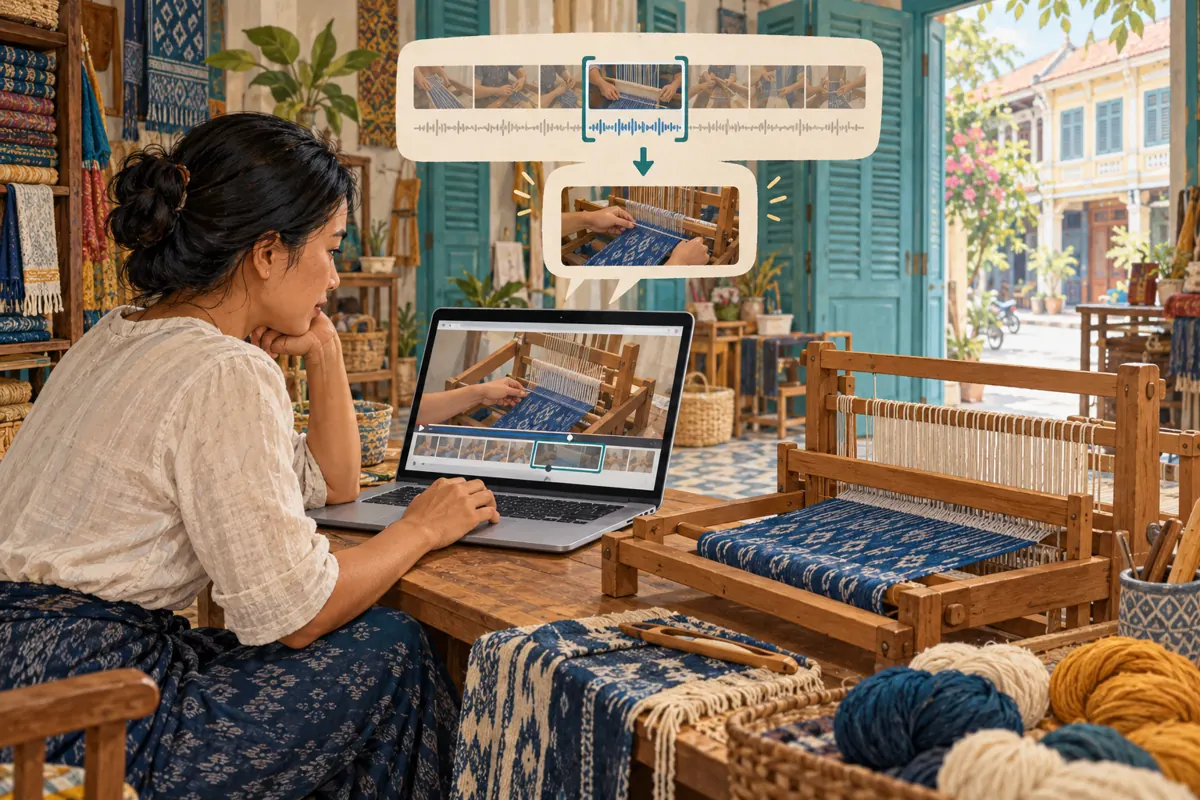
A customer asks how the shuttle moves through a tabletop loom. Your shop already has a detailed YouTube demonstration, but the answer sits between unpacking, assembly and a discussion of accessories. Extracting that explanation could give staff a useful video to share and give prospective buyers a clearer introduction to the equipment. The challenge is deciding where the explanation actually begins and ends. For Cambodian weaving-equipment businesses, a useful excerpt must preserve the model, preparation and visible result. This workflow explains how to plan a separate video clip, review it before promotion and assess SMM-panel claims without confusing engagement counts with customer understanding.
1. Choose one customer question before choosing footage
Start with a question that a short demonstration can genuinely answer. “How does the shuttle pass through this loom?” is more manageable than “How do I start weaving?” The first asks for one visible action. The second may require equipment selection, preparation, terminology and several lessons. Write the intended answer in one sentence before opening the editing controls. This gives the person selecting footage a clear reason to include or exclude each moment.
In a hypothetical example, a small Phnom Penh shop sells tabletop looms and receives enquiries from workshop tutors. Its longer recording includes assembly, threading and a weaving demonstration. The team chooses a shuttle-pass excerpt because tutors want to see the available hand clearance. That purpose calls for a view of the opening and both hands. An attractive close-up of finished cloth would not answer the question, even if it looked better in a promotional post.
2. Mark the preparation, action and result
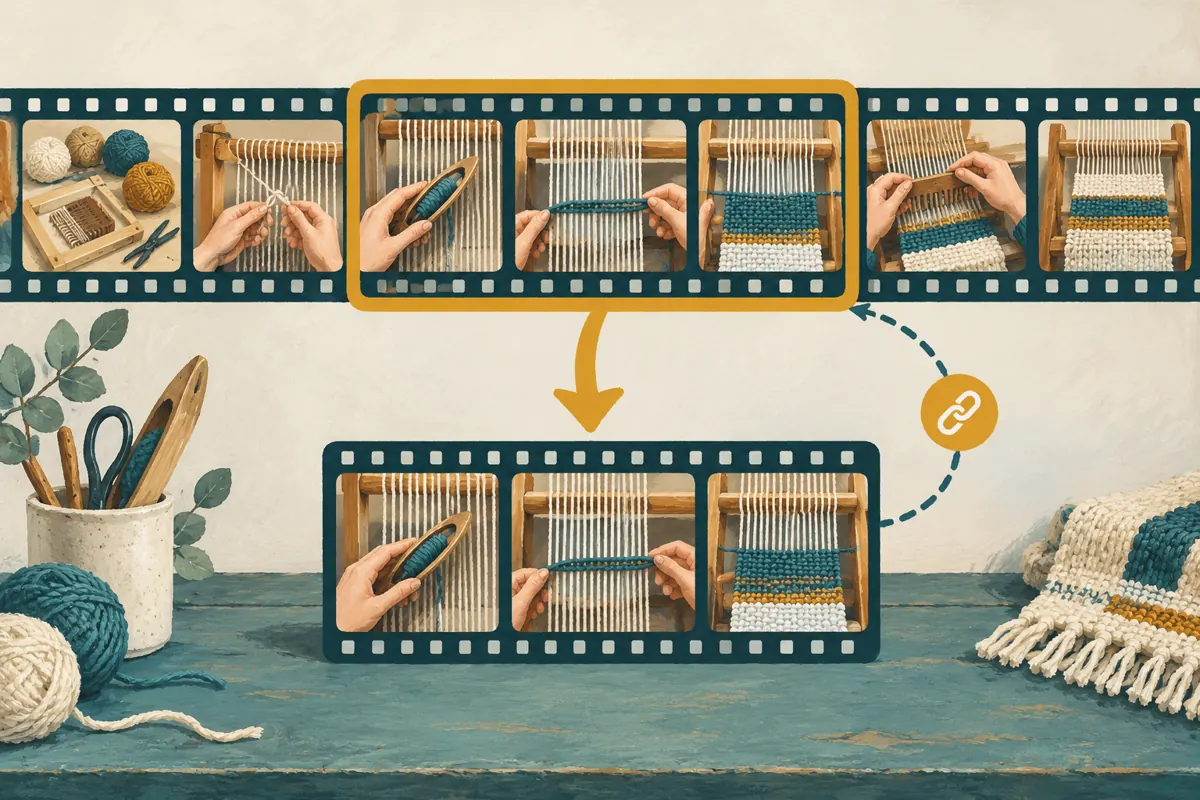
Watch the candidate passage and identify three boundaries: the preparation needed to understand the movement, the movement itself and the result that confirms what happened. Start before the demonstrator begins moving the shuttle. Finish after the viewer can see where the yarn lies. Cutting tightly around the fastest movement can remove the very information a prospective buyer needs. Let the explanation determine the length instead of choosing an arbitrary duration first.
For the hypothetical loom shop, the opening should establish which model is shown and reveal that the loom is already prepared. The middle should keep the shuttle visible as it travels. The ending should show the completed pass without immediately jumping to another topic. If the speaker says “use the other position” but the earlier position is outside the selection, extend the excerpt or choose another passage. A short video should not require viewers to guess what an instruction refers to.
3. Create a separate video clip in YouTube Studio
YouTube’s official Video Clips & Shorts guidance describes extracting material from your own longer uploads into separate videos. In Studio, open Content, then Videos, and select the source. Open Clips and Shorts, choose Create clip or Short, then Video clip. Select the passage using transcript text or timeline timestamps. When the selection is ready, choose Create draft and complete the upload process. YouTube also recommends linking the source video in the clip’s description.
Prepare a small editorial note before using those controls: source title, intended question, proposed beginning, proposed ending and reviewer. Treat it as an editing brief rather than a publishing instruction. The person operating Studio should compare the selected footage with that brief before finishing the upload. If the expected tool is absent, check the current official guidance and the options actually available in the account. Do not improvise by downloading another creator’s demonstration or presenting borrowed footage as the shop’s own.
4. Plan for manual selection in a Cambodian workflow
The official guidance limits AI suggestions and outlines to specified countries and languages; Cambodia and Khmer are not listed. Build this workflow around manual selection. A local editor who understands the spoken explanation can identify meaningful boundaries without depending on an automatic highlight. Even an apparently fluent transcript should be checked against the audio when the demonstrator names a part, distinguishes loom models or explains which component is included.
Use the language your intended customers understand. For a Khmer demonstration with an English model name, retain the exact model identifier while checking the surrounding explanation with a Khmer-speaking reviewer. In the hypothetical shop, a tutor should be able to distinguish a loom model from the name of an optional accessory. Keep a separate note of uncertain words and resolve them with the demonstrator. Guessing a technical term can create a misleading excerpt even when every selected frame is visually clear.
5. Keep the framing wide enough to prove the point
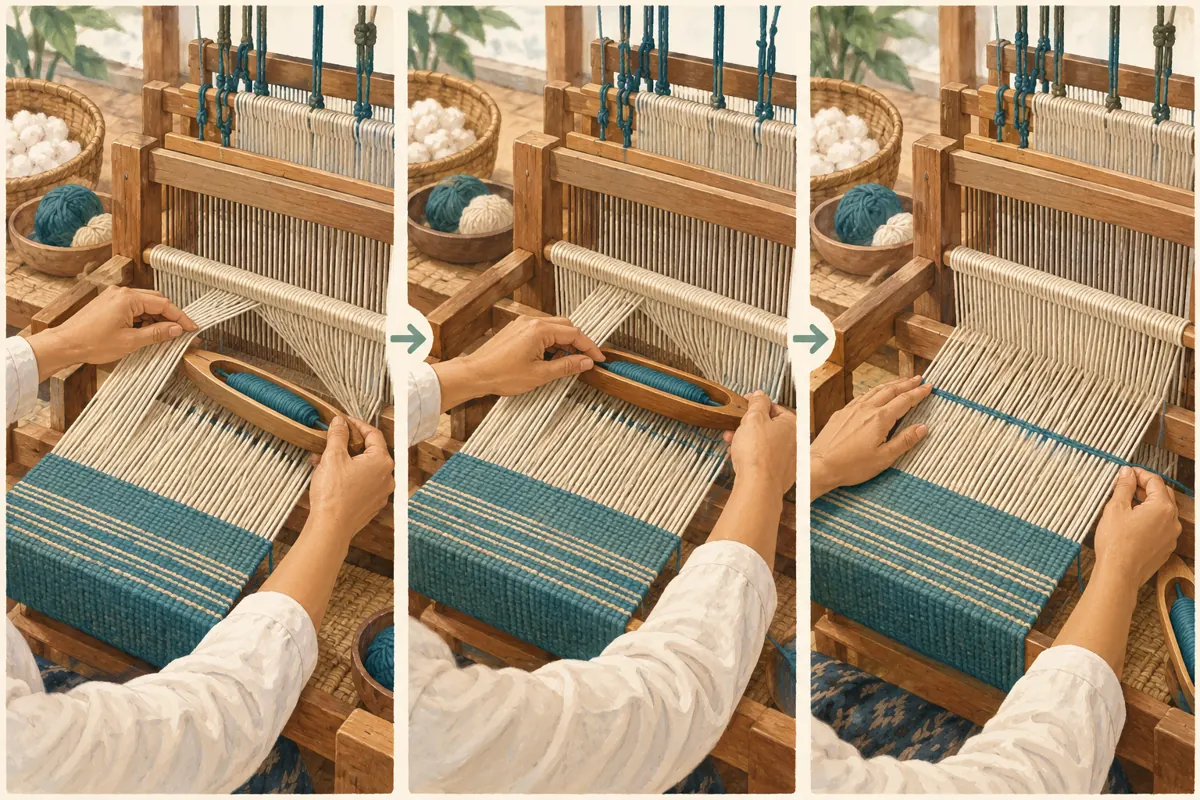
A shuttle demonstration depends on relationships between objects: where the hands begin, where the opening is and where the shuttle emerges. Review the selected passage at ordinary phone size. Check whether the viewer can follow the movement without enlarging the picture. If a tight composition hides either edge of the loom, the excerpt may show activity without explaining it. Choose footage that supports the question, even if a more decorative shot appears more polished.
Ask a colleague who did not select the passage to watch once and describe what happened. Avoid leading questions such as “You could see the clearance, right?” Instead ask where the shuttle entered, where it emerged and what was prepared beforehand. Their answer is a practical editorial check, not a performance study. If they cannot follow the action, use a clearer passage or record a new explanation. Promotion cannot restore a missing view of the equipment.
6. Make the excerpt’s promise narrower than the full lesson
Give the new video a title that describes the action it actually contains. In the hypothetical example, “Shuttle clearance on our tabletop loom demonstration model” would set a narrower expectation than “Complete weaving tutorial.” The description should explain that the loom was prepared before the selected passage and identify where viewers can find the fuller explanation. Avoid suggesting that a brief demonstration teaches every prerequisite or establishes that the equipment suits every buyer.
Check commercial details separately from the teaching sequence. Yarn, shuttles, stands or other items visible in the source recording may not be included with the product being offered now. State the current package accurately wherever the shop presents an offer. If the source contains an old price or an outdated inclusion claim, do not extract it casually and hope viewers overlook it. Choose a passage without the obsolete claim or prepare a fresh recording with current information.
7. Review the new destination before sharing it
Maintain separate entries for the full demonstration and the extracted upload in the shop’s content register. Record each title, public link, subject and review date. This prevents a staff member from sending the assembly lesson when a customer asked about shuttle clearance. It also helps future editors understand why the shorter video exists. Use descriptive internal names rather than several entries called “loom video,” which become difficult to distinguish during a busy sales conversation.
Before sharing, open the intended destination as a viewer and watch the beginning, middle and ending. Confirm that the title matches the footage and that the description points to the correct source. Test the link in the message format staff will actually use. A suitable accompanying sentence might explain that the excerpt shows one prepared loom making a shuttle pass. Invite the buyer to provide their model question privately, without requesting unnecessary personal information in public comments.
8. Apply a policy check before an SMM-panel decision
The supplied catalogue includes the exact listing “YouTube Like ~ Max 50k ~ 50k/days ~ Instant ~ 𝗥𝗘𝗙𝗜𝗟𝗟 30D”. Its name presents it as a YouTube-like service, but no supporting description was supplied. The wording does not establish the delivery method, audience location or compliance with YouTube rules. Treat the quantity, speed and refill wording as catalogue claims requiring clarification, not verified outcomes or reasons to expect enquiries from Cambodian weaving businesses.
YouTube’s fake engagement policy prohibits artificial increases in views, likes and other metrics, and warns that a hired promoter’s actions can affect a channel. Reject methods that artificially inflate engagement. Purchased engagement is not evidence of genuine interest, sales, ad delivery or Cambodian users. For this workflow, prioritize accurate editing, useful distribution and actual questions from viewers. A higher count would not demonstrate that someone understood shuttle clearance, and it would not resolve an incomplete or misleading excerpt.
9. Decide whether to share, revise or refilm
Use a simple decision process. Share the excerpt when the preparation is understandable, the whole action is visible and the ending confirms the result. Revise the selection when the necessary information already exists just outside its boundaries. Refilm when the original never shows the important detail, contains outdated product information or relies on an explanation that cannot stand alone. These choices solve different problems; repeatedly shortening the same unsuitable passage is unlikely to make it clearer.
Common mistakes include starting halfway through a sentence, removing a qualification about the model, cutting away before the shuttle emerges and presenting a demonstration accessory as an included item. Another is asking the editor to select whatever looks most exciting without defining the buyer’s question. Give the reviewer authority to return a clip for clarification. The purpose of the review is to protect the meaning of the demonstration, not merely to approve attractive footage.
10. Review usefulness through the questions that follow
After sharing, keep a brief record of relevant enquiries without treating every interaction as a sale. Note whether viewers ask about the demonstrated model, request the fuller lesson or still misunderstand the same movement. Separate observed facts from interpretation. “A viewer asked whether the shuttle was included” is a usable observation. “The clip created strong buying intent” is a much larger conclusion that the question alone cannot support.
In the hypothetical shop, repeated questions about the preparation stage would suggest that the excerpt needs a clearer opening or a separate preparation lesson. Questions about collection arrangements belong in the sales conversation and should not be mistaken for evidence about instructional quality. Review the video again when the demonstration model, included accessories or teaching explanation changes. Keep the shorter upload useful by maintaining its accuracy, rather than assuming that a successful initial review makes it permanently suitable for promotion.

Frequently asked questions
How short should the loom excerpt be?
Use the shortest passage that still answers the chosen question completely. Include the necessary setup, the visible movement and the result. If those elements require a longer explanation, keep it longer or make a dedicated recording. An arbitrary duration is less useful than a coherent demonstration.
Should we use a video clip or a Short?
Choose according to what the viewer needs to see. For this scenario, prioritize a presentation that keeps both loom edges and the shuttle path visible. Review any alternative framing before committing to it. A format change is useful only if the demonstration remains understandable.
Can we rely on automatic suggestions for a Khmer lesson?
Plan to select the passage manually. Check the actual speech, model identifiers and visual boundaries yourself. A fluent reviewer can also catch references to earlier instructions that would become confusing when separated from the full lesson.
What if the selected passage mentions an old offer?
Look for a complete passage without that claim. If removing it breaks the explanation, make a fresh recording. Do not rely on viewers noticing a correction elsewhere while the video itself continues to present an obsolete price or package.
Would buying likes help us judge whether the clip is useful?
No. Purchased likes cannot establish comprehension or buying interest, and artificial engagement conflicts with YouTube’s policy. Ask a reviewer to explain the action after watching, then use genuine viewer questions to identify missing information. Keep any service records separate from conclusions about the content.
Explore the current service catalogue, create an account, or ask a specific question through support tickets.
Prepared with AI assistance. Illustrations explain the workflow and do not represent customer results.