21/10/2026 11:20
Stock Arrived Yet? YouTube Scheduled Publishing for Cambodian Lunch-Flask Shops
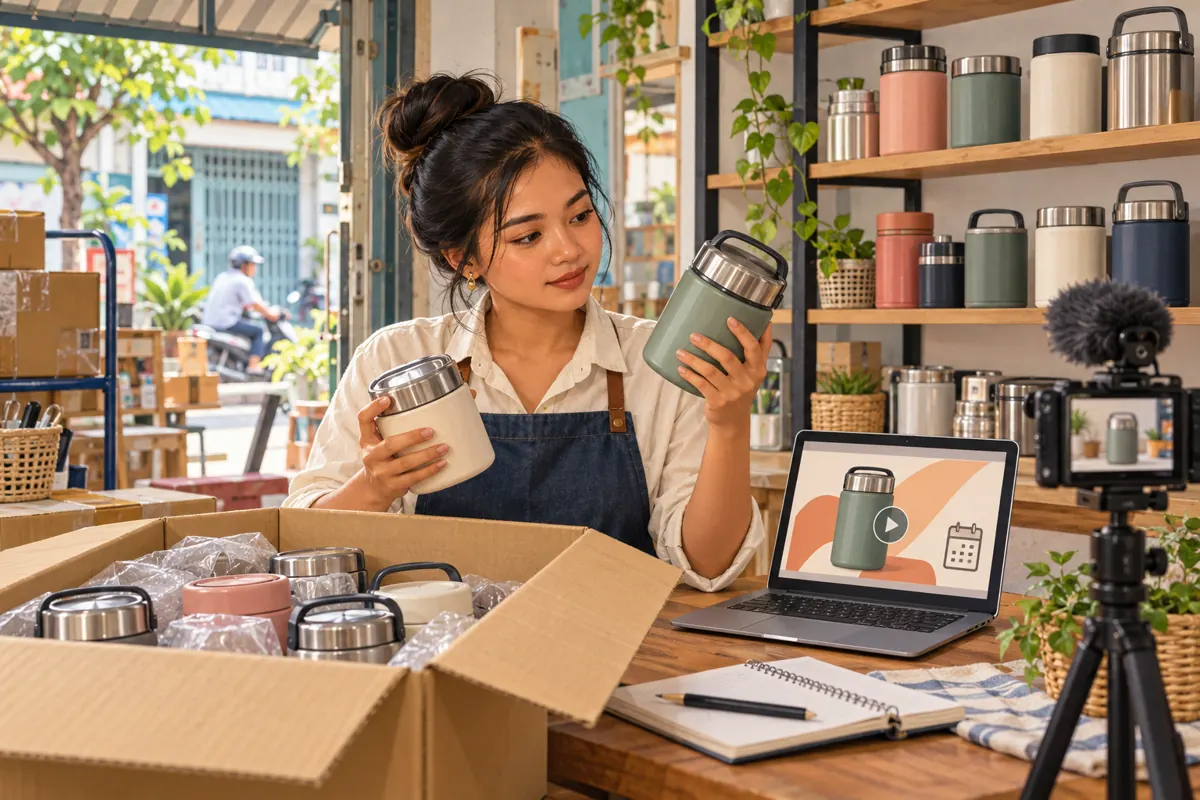
A product demonstration can be ready before the product is ready to sell. For a Cambodian shop selling insulated lunch flasks, that gap matters: the video may show a particular lid, inner container or carrying handle that the incoming stock does not actually include. Scheduling the demonstration should therefore begin with a stock decision, followed by a publication decision. This guide uses a hypothetical Phnom Penh shop to explain how to prepare a release, revise it when a delivery changes, and check what customers can see. It also explains where an SMM panel review belongs—and why a purchased engagement count cannot confirm local demand.
1. Give the release a condition, not just a date
In this hypothetical example, a shop has filmed a lunch flask using a supplier sample. A delivery is expected on Thursday, and the owner wants the demonstration available on Friday morning. The useful release condition is more specific than “the cartons arrived.” Someone must check that the sale stock matches the sample, identify which accessories are included, and confirm whether customers can collect the product or only enquire about it.
Write that condition before choosing a time. For example: “Release after the stock keeper verifies the lid and inner container, and the counter team confirms pickup availability.” Name the person who can approve it and the person who will change the schedule if approval is missing. This prevents a video editor from treating a completed upload as permission to advertise availability. It also gives the shop a clear reason to postpone without turning the decision into an argument about marketing momentum.
2. Separate the reusable demonstration from the launch offer
Build the main demonstration around information that should remain useful: how the flask opens, what comes apart for cleaning, which components are included, and how its dimensions are measured. Avoid casually adding “available today” to the spoken explanation if availability depends on an incoming delivery. A reusable demonstration is easier to maintain when temporary selling information has an identifiable place.
For the hypothetical shop, the opening could explain that the video shows the handled version with a removable inner container. The accompanying launch message can state the confirmed collection arrangements. Check both pieces together before release. If the recorded voice promises an accessory that is absent from the stock, changing the description alone leaves a contradictory video. Correct the footage or delay the release. Also distinguish a visible construction detail from a performance claim: showing a seal does not establish a tested heat-retention period or prove that a flask will never leak.
3. Set the publication time and record the local meaning
YouTube allows a private video to become public at a scheduled time. Its official instructions are to upload the file in YouTube Studio, enter the details, choose Schedule, set the date, time and time zone, and confirm. Record the chosen settings in the shop’s release note. The supporting instructions appear in YouTube Help’s “Schedule video publish time,” linked in the sources.
Use an unambiguous internal entry such as “Friday, 09:00, Cambodia time,” alongside the exact calendar date and the time zone selected in the interface. Have a colleague read it back against the intended shop opening and staff availability. Avoid relying on “tomorrow morning” in a message that may be read later. YouTube also explains that the watch-page publication date is based on Pacific Standard Time and can differ from the date shown in Studio. Do not interpret that date difference alone as proof that the release failed.
4. Choose a time the shop can support
A practical release time is one when someone can check the video and answer the first relevant questions. For this shop, that may mean waiting until the counter worker has the product, the approved accessory list and the collection instructions. The best operational choice is not necessarily the earliest possible moment after delivery. Scheduling should make the customer experience manageable.
Prepare answers to likely questions before the release: Does the inner container come with the flask? Can the handle fold down? Is the displayed colour available? Can someone collect from the shop, and what must they confirm first? Write the answers in the language the shop normally uses with its customers, retaining model identifiers accurately. If provincial delivery is offered, distinguish the shop’s confirmed dispatch arrangements from an arrival estimate. Do not let a video launch create a promise that the packing or delivery team has not approved.
5. Make the last stock check a real decision
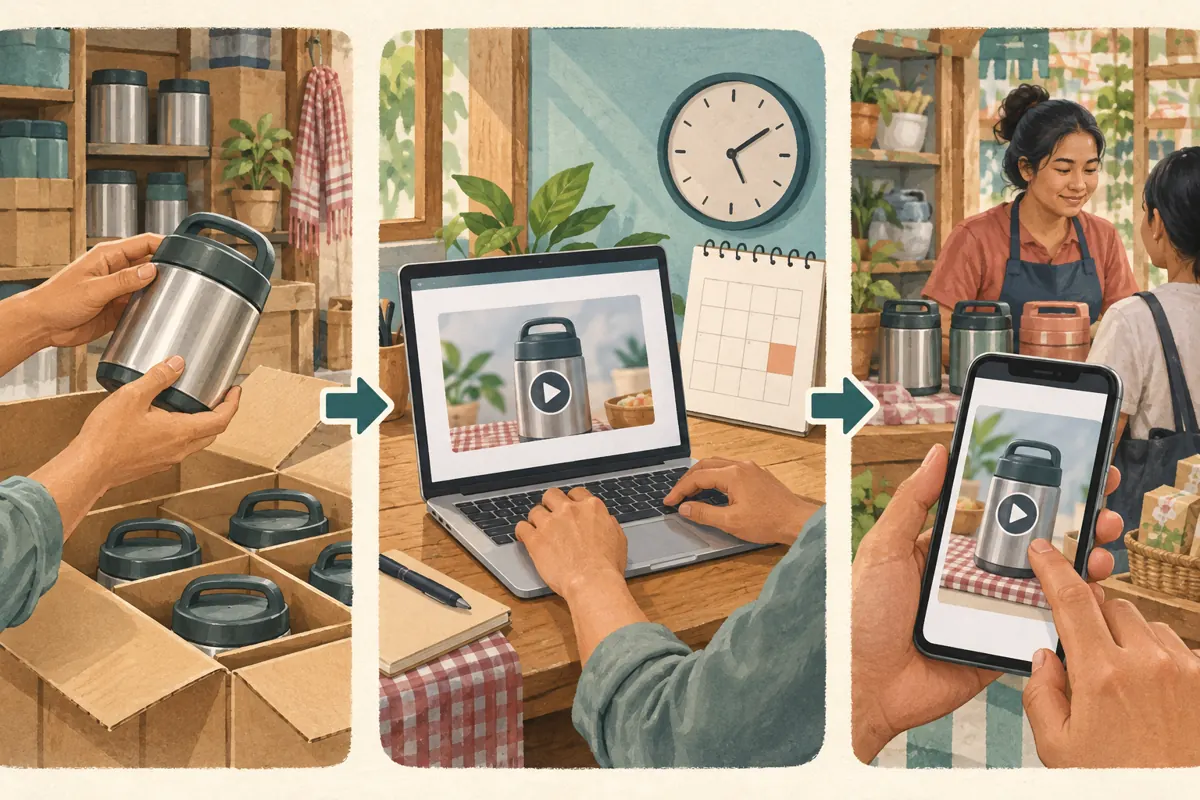
Set an internal review point early enough to change the announcement. Inspect an actual sale unit against the video: lid shape, handle, inner container, included spoon or bag, and any displayed model identifier. Check the offer wording against current availability. A photograph of closed cartons is not a substitute for checking the relevant contents.
Use three possible decisions. Proceed when the stock and offer match. Correct the content when the mismatch is specific and can be resolved accurately. Postpone when important facts remain uncertain. In another hypothetical example, the delivery contains a screw-top flask while the demonstration shows a different closure. Even if both have similar capacity, the opening demonstration no longer represents the item being sold. The person approving stock should identify that difference explicitly, rather than sending a vague “looks fine” message that leaves the editor to guess what was checked.
6. Reschedule the announcement as well as the video
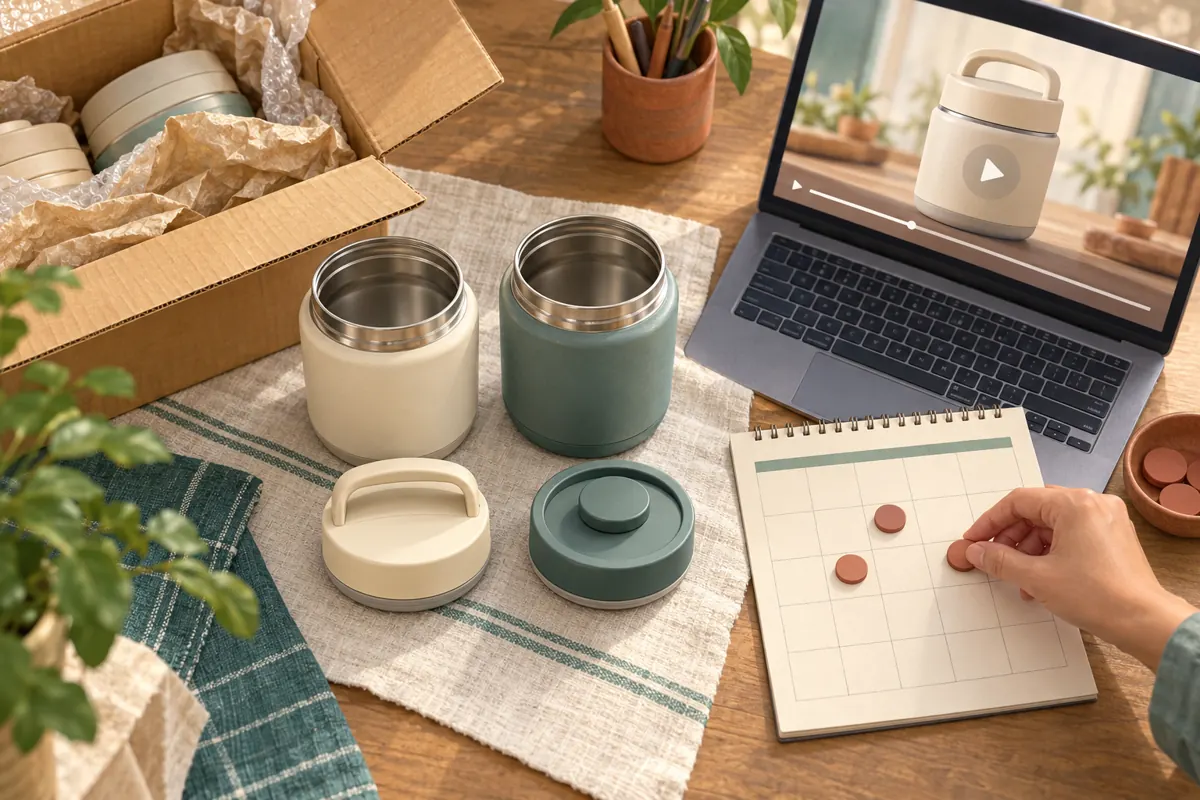
YouTube’s guidance allows the scheduled time to be changed. In Studio, select the video under Content, open its visibility controls, ensure it is Private, and use Edit Draft to choose a new schedule. Review the saved result. The same official page notes that a Community Guidelines strike can prevent scheduled publication during the penalty period.
Changing the video’s timing is only part of the shop’s work. Review any prepared Facebook message, Telegram announcement, printed collection notice or staff reply that refers to the original launch. In the hypothetical shop, a delayed delivery should trigger a short internal note: which video is affected, why the release moved, what information is still missing, and who owns the next decision. Avoid replacing one uncertain promise with another precise date. If the revised arrival is unconfirmed, pause the availability announcement until the shop can state something dependable.
7. Review SMM panel claims separately from release readiness
The supplied khmer-social.com catalogue includes the exact listing “Youtube Views ~ Video/Shorts ~ Max 10M ~ 50k/days ~ Instant ~ 𝐍𝐎 𝗥𝗘𝗙𝗜𝗟𝗟”. Its name identifies a views-related listing for videos or Shorts, but the supplied description is empty. The title’s capacity, timing and refill wording should not be treated as independently verified performance. Nothing in the supplied description establishes Cambodian audience targeting, interested shoppers or a documented advertising method.
Before considering expenditure, require a clear explanation of the delivery method and assess it against platform rules. YouTube’s fake engagement policy prohibits artificial increases in views and other metrics, and says a hired promoter’s actions can affect the channel. Reject methods that artificially inflate engagement. Purchased engagement is not evidence of genuine interest, sales, ad delivery or Cambodian users. A panel listing also cannot verify stock readiness or make a scheduled video publicly accessible. Keep these decisions separate, and do not promote metric-inflation services in the video or its description.
8. Verify the customer journey after release
When the intended release time arrives, check the actual viewing experience before circulating the announcement widely. Open the intended video link in a browser session that is not signed into the shop’s channel. Confirm that the correct demonstration plays, that its opening matches the advertised product, and that the enquiry destination is understandable. A successful upload viewed by the owner is not the same check.
Test the journey on a phone as well. Can a viewer identify the model without enlarging a tiny label? Does the message explain whether they should ask about stock or arrange collection? Can staff distinguish this flask from a similar one? If access or content is wrong, hold the outgoing announcement while the owner investigates. Record what was observed and when. Do not tell customers that a launch succeeded merely because the planned time passed or a separate service dashboard reports an order status.
9. Keep viewing, service and enquiry evidence separate
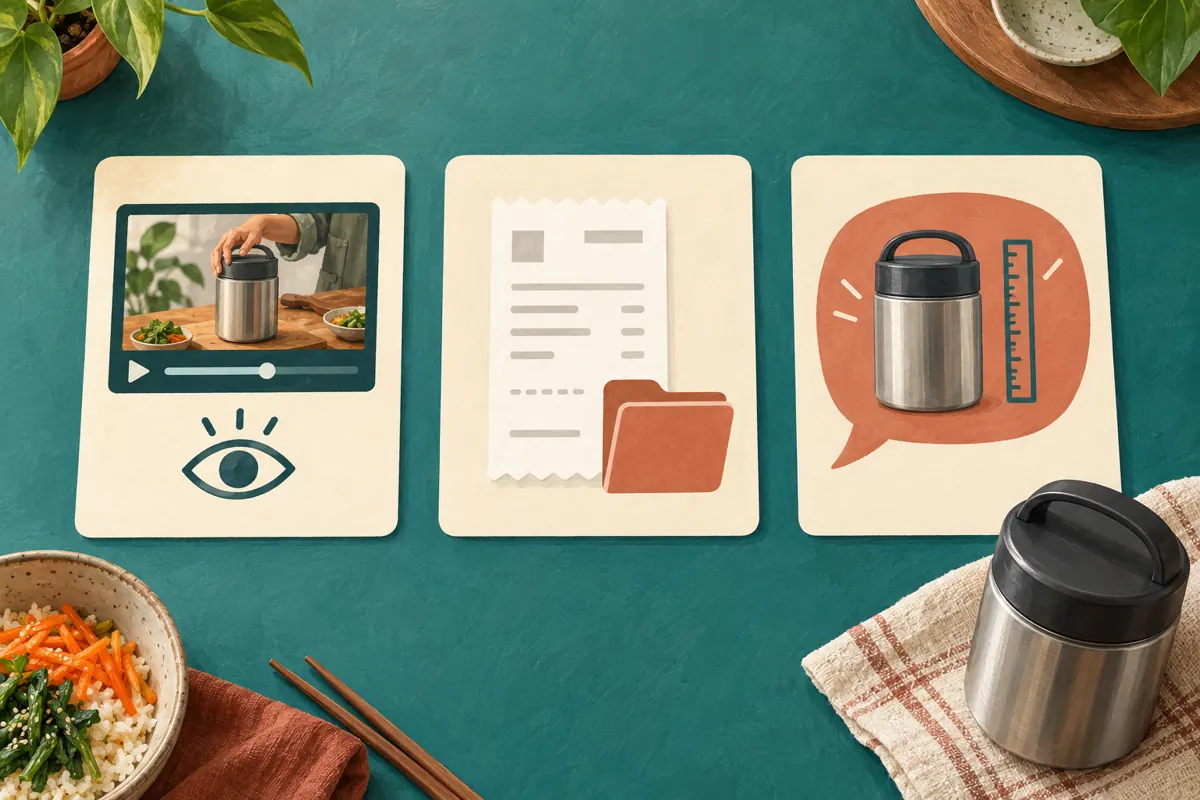
Maintain a short release record with the intended time, the observed public-access check and any content changes. If there is an existing service transaction, keep its order reference and provider statements in a separate record. Then record genuine enquiries by their substance: accessory questions, dimension requests, colour availability or collection arrangements. Avoid copying unnecessary personal details into a marketing worksheet.
These records answer different questions. A viewing record helps describe content consumption; a service record describes what a supplier reported; an enquiry record shows what somebody actually asked. They do not automatically establish a causal chain. In a hypothetical review, repeated questions about the inner container may suggest that the demonstration needs a clearer close-up. That is a useful editorial decision even when the shop cannot establish how each person discovered the video. Ask customers optionally where they found the demonstration, and retain “unknown” when attribution is uncertain.
10. Fix recurring mistakes before the next release
Common mistakes include scheduling from a supplier’s expected arrival, assuming a sample matches every shipment, recording a time without its zone, and letting promotional messages continue after the video is postponed. Another is treating an increase in a public counter as confirmation that Cambodian buyers are responding. Each mistake substitutes an indirect signal for the specific fact the shop needs.
At the next team review, choose one concrete improvement. If accessories caused confusion, require a stock photograph beside the approved component list. If nobody checked the public link, assign that responsibility before the next upload. If two staff members gave different collection instructions, create one approved answer with a review date. Keep the process short enough to use during a busy delivery day. Its purpose is to make the published demonstration accurate and the next customer action clear, while leaving room to stop when the evidence changes.
Frequently asked questions
Should we schedule a video while the stock is still travelling?
You can prepare the content, but make publication conditional on the claims being supportable. A general demonstration may remain accurate without stock on hand if it makes no availability promise. A launch announcing immediate collection needs confirmed sale stock. Set a review point and an owner who can postpone it.
What if only the flask colour differs from the demonstration?
Decide whether the difference changes what a reasonable buyer would expect. If the video clearly presents one colour as an example, accurate accompanying availability information may be sufficient. If it advertises that exact colour as ready to collect, correct the promise. Do not silently substitute stock when a customer enquires.
Do we need to buy views before sharing the new demonstration?
No. Start with an accurate video, a working public link and clear customer instructions. Share it through the shop’s appropriate existing channels. A view-service listing does not establish useful discovery or local demand, and artificial engagement conflicts with YouTube’s policy. Evaluate any paid promotion by its documented method.
What should we do if customers already saw the old launch time?
Publish a clear correction through the same channels that carried the announcement. State what changed and what customers can currently do, such as enquire without travelling to collect. Give a replacement date only when confirmed. Update staff replies too, so the public correction and private conversations agree.
How can we judge whether the release was useful without claiming sales impact?
Review whether viewers could access the right demonstration and whether subsequent questions became more specific or exposed missing information. Record completed sales through the shop’s normal process, but do not attribute them to the video without supporting evidence. Useful content improvements can be identified even when the discovery source remains unknown.
Explore the current service catalogue, create an account, or ask a specific question through support tickets.
Prepared with AI assistance. Illustrations explain the workflow and do not represent customer results.