21/10/2026 04:07
Khmer Speech, English Model Name: YouTube Language Checks for Cambodian Label-Printer Shops
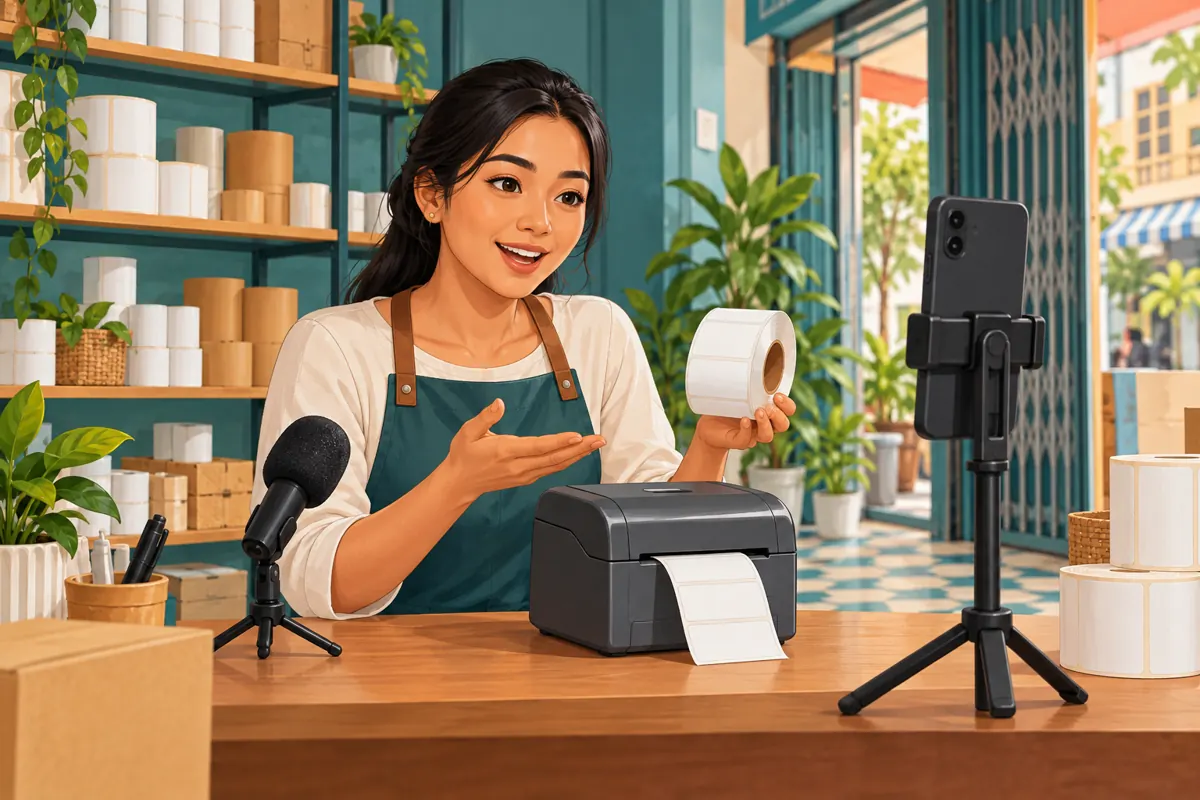
A label-printer demonstration can contain Khmer instructions, an English model name and packaging printed in another language. Those details describe different parts of the video. Before promoting it, a Cambodian shop needs to establish which language actually carries the explanation. Otherwise, staff may prepare the wrong review brief, misunderstand what needs translating or assume that an English product title means the demonstration is in English. This guide follows a hypothetical Phnom Penh equipment shop preparing a roll-loading demonstration for YouTube. The workflow starts with listening, moves through the original-language setting and finishes with a practical comprehension check. It also explains why an SMM service label cannot establish that viewers understand the demonstration or represent potential Cambodian customers.
1. Define the customer task before checking the language
In this hypothetical example, the shop sells compact printers to small retailers that prepare product and parcel labels. Its demonstration answers one narrow question: which way should the label roll face when it enters the printer? The presenter explains the action in Khmer but reads an English button name aloud. The intended outcome is that a viewer can identify the roll orientation and ask about compatibility with their own model.
Write that outcome at the top of the review note. Avoid starting with a target for views or likes because neither tells the editor whether the instruction is understandable. Decide what the video must show, what the narration must explain and what information a customer should send afterwards. For this shop, a model name and a photograph of the existing label roll would make a more useful enquiry than a generic request for the cheapest printer.
2. Separate spoken language from product lettering
Listen to the explanation without looking at the packaging. Identify the language used for the sequence of actions, cautions and conclusion. An English brand name, a technical abbreviation or a borrowed product term does not by itself make the surrounding explanation English. Similarly, a Khmer title does not establish that a supplier's recorded demonstration contains Khmer speech.
Keep three separate notes: the language of the spoken explanation, the language of the title and description, and the language of each caption version being reviewed. This simple separation prevents a common handoff error: asking someone to check an English title when the actual problem is an unclear Khmer instruction. For a substantially bilingual recording, note where the language changes and which passages customers need to understand. Treat that as an editorial decision requiring listening, rather than guessing from the thumbnail.
3. Audit the beginning, critical action and closing instruction
Review the full recording, paying particular attention to three moments: the introduction, the roll-loading action and the closing request. At each moment, ask whether the spoken explanation stands on its own. In the hypothetical demo, the presenter might say the equivalent of 'put this side here' while their hand hides the paper path. Correctly identifying the spoken language cannot repair that missing visual reference.
Record the location of each unclear moment and describe the problem concretely. 'The roll's loose end is hidden while the presenter explains its direction' gives the editor something to fix. 'Language confusing' does not. If a technical term is essential, have a colleague who knows the product confirm its meaning. Keep product accuracy and language fluency as separate review responsibilities; a fluent listener may still be unfamiliar with the printer mechanism.
4. Correct the original-language setting in YouTube Studio
YouTube says the video-language setting helps identify a video's original language, supports caption work and helps viewers find videos in their language. For an uploaded video, open YouTube Studio, select Content, choose the video and expand SHOW MORE. Under Language and captions certification, review the language choices for the video and its title and description, then save. The official instructions are listed in the sources.
Make the selection from the recording you reviewed, rather than from the language your team hopes to reach. Keep the public video link in the review note so another staff member can identify the exact upload. After saving, reopen the details and confirm the intended selection remains. This is a small verification step, but it prevents a correction made to a similarly named draft from being mistaken for a correction to the published demonstration.
5. Understand what the correction leaves unresolved
YouTube explains that changing the original-language setting changes the source used for future translated subtitles. Existing published and draft captions remain unaffected. Therefore, do not close a caption-quality issue merely because the language field has been corrected. Review the actual caption text separately wherever the shop has prepared or published it.
Also distinguish metadata accuracy from the customer's listening experience. Selecting a language does not rewrite a vague sentence in the recorded narration. If the presenter describes the wrong direction, the team needs a content correction. If the instruction is accurate but difficult to hear, the recording needs an audio review. If the main obstacle is unfamiliar terminology, prepare a plain-language explanation alongside the technical term. Choose the remedy that addresses the observed problem.
6. Prepare a small terminology note for the reviewer
For the hypothetical label-printer shop, a useful terminology note contains the model identifier, the name of the feed button, the phrase used for the label backing and the description of the roll's loose end. Write what each term refers to in this particular demonstration. The note should help a reviewer preserve meaning, without becoming a promotional script full of technical vocabulary.
Keep the visible model identifier consistent with the actual machine. If two printers use different loading arrangements, avoid combining their instructions simply because their product names look similar. Ask the reviewer to flag uncertainty instead of replacing an unfamiliar term with a confident guess. This matters when a short translated phrase could reverse an instruction, omit a condition or make one model's procedure sound universal.
7. Test understanding with a realistic viewing task
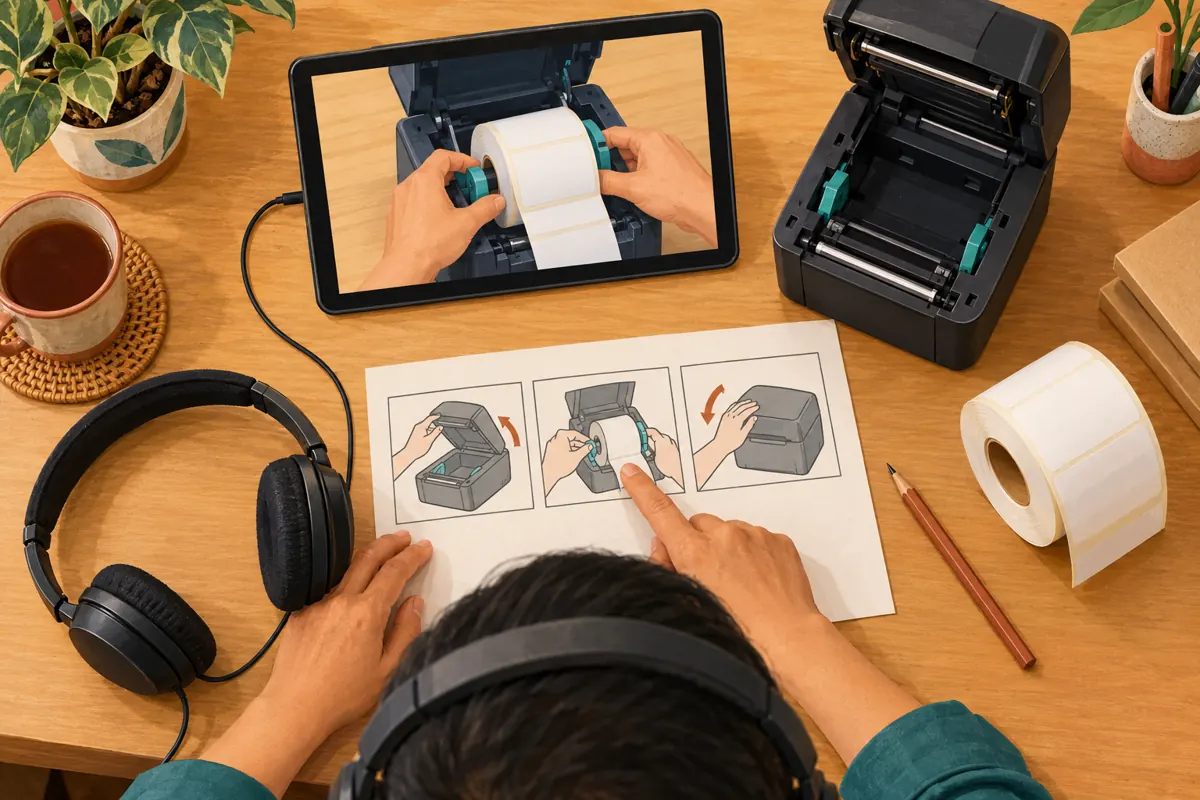
Invite a colleague who did not edit the video to watch it on a phone. Ask them to explain which way the roll faces and where they would look to identify the demonstrated model. Give them the same information an ordinary viewer would receive. Avoid coaching them through the difficult moment, because that hides the weakness you are trying to discover.
In this hypothetical test, the colleague understands the Khmer narration but cannot see whether the labels feed from above or below the roll. That observation points to a missing close-up, not a need for a different language selection. Record the observation without claiming it represents every Cambodian viewer. After revising the shot, repeat the specific task that failed. A focused retest provides more useful evidence than asking whether the whole video now 'looks professional'.
8. Evaluate SMM service wording without treating it as audience evidence
The supplied catalogue includes the exact public name 'YouTube Unique Views - 𝐀𝐫𝐚𝐛𝐢𝐜 𝐒𝐩𝐞𝐚𝐤𝐞𝐫𝐬 [RAV™ - Real & Active Views]'. Its description is empty. The title presents it as a views service with an Arabic-language claim, but the supplied information does not establish delivery methods, viewer authenticity, comprehension or Cambodian relevance. Quoting the name is not verification of its claims.
For a Khmer roll-loading demonstration, a language label in a service catalogue cannot substitute for understanding the recording or identifying the intended customers. Purchased engagement is not evidence of genuine interest, sales, ad delivery or Cambodian users. Do not turn an order record into a statement that local retailers understood the instructions. Keep any service records separate from actual customer questions, demonstrations completed and confirmed transactions.
YouTube prohibits artificial increases in engagement metrics and warns that a hired promoter's actions can affect the channel. Review proposed methods against that policy before spending. Reject methods that artificially inflate engagement. A listing's availability does not establish platform permission, and a refill term does not resolve a policy conflict. The shop can complete this entire language workflow without purchasing engagement.
9. Promote the useful answer and record meaningful responses
Once the demonstration passes review, introduce it with the problem it resolves. A hypothetical accompanying message could explain that the video shows the loading direction for the displayed model and invite viewers to send their own model identifier before assuming compatibility. Share it where the shop already has permission to communicate and where that specific question is relevant. Keep the language of the invitation consistent with the explanation customers will hear.
During the following review period, record the substance of voluntary enquiries. Separate questions about paper direction from questions about model compatibility, stock or pickup. A repeated compatibility question may suggest that the model identification needs greater prominence. It does not prove that the original-language setting is wrong. Use the pattern to choose the next content improvement, while recognising that enquiries alone do not establish completed sales.
10. Avoid shortcuts that create another round of confusion
Do not select English merely because the product name uses Latin letters. Do not assume an English title makes Khmer narration accessible to an English-speaking viewer. Do not copy a language selection from a previous upload without checking the new recording. These shortcuts replace direct evidence with an appearance-based guess, and they can spread when several employees reuse the same upload notes.
Another mistake is changing several things at once and then attributing every subsequent result to the language correction. If the team also replaces the opening shot, adds a clearer explanation and changes where it shares the link, record those changes. The practical purpose is to make the demo useful, not to manufacture a causal story about one setting. Assign one person to confirm the final upload and one reviewer to verify the customer task.

Frequently asked questions
Should a Khmer demonstration be marked English because the printer has an English model name?
Base the decision on the language carrying the explanation. In the hypothetical example, the actions and cautions are explained in Khmer, while the English model name identifies the product. Preserve that distinction in the review note. A product identifier is not a reliable substitute for listening to the narration.
What should the shop do if the presenter switches languages halfway through?
Document where the switch occurs and whether customers need both passages to complete the task. Have a reviewer who understands both languages assess the recording. If the switch makes the demonstration hard to follow, consider preparing a more consistent explanation. Do not force a complex editorial problem into a language-field decision and assume it is solved.
Will changing the original language fix captions that are already wrong?
No. YouTube states that existing published and draft captions are unaffected by this setting change. Correct the language field where needed, then review the existing caption text as a separate task. For a product demonstration, check especially the words that determine orientation, sequence and model compatibility.
Can the shop claim the language correction increased sales?
A correction alone does not support that conclusion. Keep a record of what changed and examine actual enquiries and transactions separately. If customers say the demonstration helped them, record that feedback accurately without expanding it into a claim about all viewers or attributing every sale to one metadata adjustment.
What is the best next step when the language is correct but customers still ask the same question?
Return to the exact moment that should answer it. Check whether hands obscure the mechanism, whether the camera shows the relevant side and whether the narration names the part clearly. Repeated questions may reveal a visual or terminology problem. Test a targeted revision before producing an entirely new promotional campaign.
Explore the current service catalogue, create an account, or ask a specific question through support tickets.
Prepared with AI assistance. Illustrations explain the workflow and do not represent customer results.